Insights & Resources

Apparel Manufacturing Blog

Industry news, production guides, and trend analysis from Los Angeles clothing experts.

0%

Custom Tie Dye Tops Production turns a visual idea into wearable, repeatable apparel. It combines fabric selection, color planning, resist techniques, garment construction, and quality inspection. The process may look spontaneous. It is not entirely spontaneous.

Yoshiko Iwamoto Wada, a respected textile artist and shibori scholar, explains, “Shibori is a Japanese word that refers to a variety of ways of embellishing textiles by shaping cloth and securing it before dyeing.” Her observation helps clarify the technical foundation behind many tie-dye methods. Folding, twisting, stitching, and binding control how dye moves through cotton fibers. Small rubber bands can create sharp rings. Loose folds produce softer clouds of color.

In commercial production, experienced teams test fabric weight, dye concentration, curing time, and wash performance before approving a design. A heavyweight cotton tee absorbs color differently from a lightweight jersey. That difference affects both appearance and shrinkage. Production records should document every tested variable. Reliable suppliers also verify fiber content and colorfastness through appropriate testing.

Yet Custom Tie Dye Tops Production is never perfectly predictable. Humidity, fabric tension, and hand pressure can change the final pattern. That uncertainty requires careful judgment. It can also create character. However, inconsistency becomes a problem when customers expect matching pieces. This guide examines the production stages, practical controls, and quality decisions behind custom tie-dye tops. It also considers where handmade appeal ends and scalable manufacturing begins. The answer is not always tidy.

What Is Custom Tie Dye Tops Production?

Definition and Scope of Custom Tie-Dye Tops Production

Custom tie-dye tops production is the made-to-order development of shirts with specified colors, patterns, fabrics, sizes, and quantities. Its scope begins with artwork and fabric selection. It continues through color testing, tying or folding, dye application, washing, drying, inspection, and packing.

A production brief should identify the fiber blend, fabric weight, color references, tolerance limits, and target quantity. Small batches matter. They allow producers to test color bleeding, shrinkage, and pattern consistency before full production. Textile Exchange’s 2024 Materials Market Report records 124 million tonnes of global fiber production in 2023. This figure shows why material choice belongs inside the production definition, not outside it. Cotton, recycled fibers, and blended fabrics can absorb dye differently. Results may vary.

Custom production also includes process control and waste decisions. The Fashion on Climate report estimated that fashion generated about 2.1 billion tonnes of greenhouse gas emissions in 2018. Smaller, demand-led runs may reduce unsold inventory, but they do not automatically reduce environmental impact. Water use, washing cycles, rejected pieces, and leftover dye still require attention. Color is never passive. A slightly uneven spiral may feel authentic, while an uncontrolled patch can become a quality failure. Producers should record batch recipes, drying times, and inspection results. The process is not perfectly uniform, and that limitation deserves honest review.

What Is Custom Tie Dye Tops Production? - Definition and Scope of Custom Tie-Dye Tops Production

Data Dimension Production Data / Definition Scope and Practical Considerations
Definition Custom tie-dye tops are garments designed and produced to specified requirements for color placement, pattern, garment style, sizing, labeling, and finishing. Customization may cover a single sample, a limited collection, or a repeat production order.
Common Top Styles T-shirts, tank tops, crop tops, long-sleeve tops, sweatshirts, and hoodies. The selected silhouette affects fabric consumption, dye penetration, sewing operations, and final inspection requirements.
Typical Base Fabrics Cotton and cotton-rich knitted fabrics are widely used; cotton absorbs fiber-reactive dyes effectively. Cotton-polyester blends require dye selection based on fiber content. Fabric composition, weight, stretch, and pre-treatment influence color appearance, shrinkage, and dimensional stability.
Fabric Weight Common T-shirt jersey weights generally range from approximately 120 to 220 g/m²; heavier tops use higher fabric weights. The required weight should be confirmed after washing because dyeing and finishing can alter hand feel and measurements.
Tie-Dye Pattern Types Common patterns include spiral, bullseye, crumple, stripe, accordion pleat, sunburst, and ombré effects. Pattern repeatability depends on folding, binding, dye application, batch size, and operator or equipment control.
Color Specification Color requirements are normally defined with approved swatches, color references, artwork, dye recipes, and tolerance standards. Hand-dyed garments naturally show variation; production approvals should define acceptable differences in shade and pattern placement.
Core Production Stages Design confirmation, fabric inspection, garment preparation, folding or binding, dye application, fixation, rinsing, washing, drying, sewing or finishing, inspection, and packing. Some producers dye fabric before cutting, while others dye completed or partially sewn garments. Each method creates different pattern and quality characteristics.
Dye Classes Fiber-reactive dyes are commonly used for cellulosic fibers such as cotton; pigment and other dye systems may be selected for different fibers or visual effects. Dye selection must match fiber content, fixation conditions, colorfastness targets, and applicable chemical-management requirements.
Customization Options Custom options include garment shape, color palette, pattern location, contrast level, sleeve and neckline details, size range, labels, hangtags, and packaging. Every additional option can affect sampling, minimum order quantities, production planning, and inspection criteria.
Sampling Requirements A sample or lab-dip approval is used to confirm pattern, color, fit, fabric hand, construction, and wash appearance before bulk production. For multi-color designs, separate approvals may be required for each colorway or significant construction change.
Quality-Control Checks Typical checks include measurements, fabric defects, seam construction, shade consistency, pattern placement, colorfastness, shrinkage, print or label accuracy, and packing condition. Acceptance limits should be agreed before production because artistic variation is inherent in many tie-dye processes.
Colorfastness Performance Testing may evaluate resistance to washing, rubbing, perspiration, and light exposure using recognized textile test methods. Results depend on fiber, dye chemistry, fixation, washing, detergent, and the final care instructions.
Washing and Shrinkage Prewashing or garment washing can remove unfixed dye, soften the fabric, and stabilize dimensions. Cotton knits may shrink if not properly pre-shrunk or controlled. Final measurement specifications should be evaluated after the agreed wash and finishing process.
Sustainability Scope Relevant factors include water use, wastewater treatment, chemical handling, energy consumption, fabric waste, recycled content, packaging, and product durability. Lower-impact production requires documented chemical controls, responsible wastewater management, efficient batch planning, and appropriate care labeling.
Final Deliverables The completed production scope normally includes approved garments, size and color assortments, care labels, packaging specifications, inspection records, and shipment documentation. A clear technical specification helps align design intent, manufacturing execution, quality expectations, and end-user care.

Design Planning and Fabric Selection for Custom Tie-Dye Tops

Custom Tie-Dye Tops Production

Design planning begins with a clear visual direction. Decide the base color, dye layout, contrast level, and intended fit before sampling. A spiral pattern creates movement, while folded lines produce sharper, quieter shapes. In my sampling experience, small placement changes can alter the entire appearance of a top. Mark the neckline, sleeves, and hem carefully. Dye near seams may spread differently.

Fabric selection controls both color and comfort. Cotton jersey absorbs dye well and gives a soft, familiar hand feel. A heavier fabric can support bold patterns, but it may require longer processing time. Always test shrinkage, colorfastness, and surface texture before approving bulk production. Prewash the fabric. It reveals problems early. A sample may look slightly uneven, and that is not always a defect. Still, uneven absorbency can make the final result unreliable. That part deserves more testing.

Tips: Prepare several small swatches with different dye concentrations. Record fabric weight, water temperature, processing time, and washing results. Keep one approved swatch as a production reference. Avoid judging color under only one light source. Natural daylight often exposes hidden differences. Leave room for human variation, but define acceptable limits clearly. Perfect repetition is difficult with hand techniques, and pretending otherwise can create costly corrections later.

Production insight: Fiber-reactive dyes bond most effectively with cellulose-based fibers such as cotton, rayon, linen, and hemp. A cotton/polyester blend contains less cellulose, so its color coverage is typically less uniform. Polyester requires a different dye system, such as disperse dyes, for strong color development.

The Step-by-Step Tie-Dye Manufacturing Process

Custom tie-dye tops production begins with fabric selection, not dye application.

Cotton jersey is commonly tested for absorbency, shrinkage, and color response. A production team records these results before cutting begins. The fabric is then prewashed to remove finishes that may block dye penetration. It must be dried evenly. Uneven moisture can create pale patches.

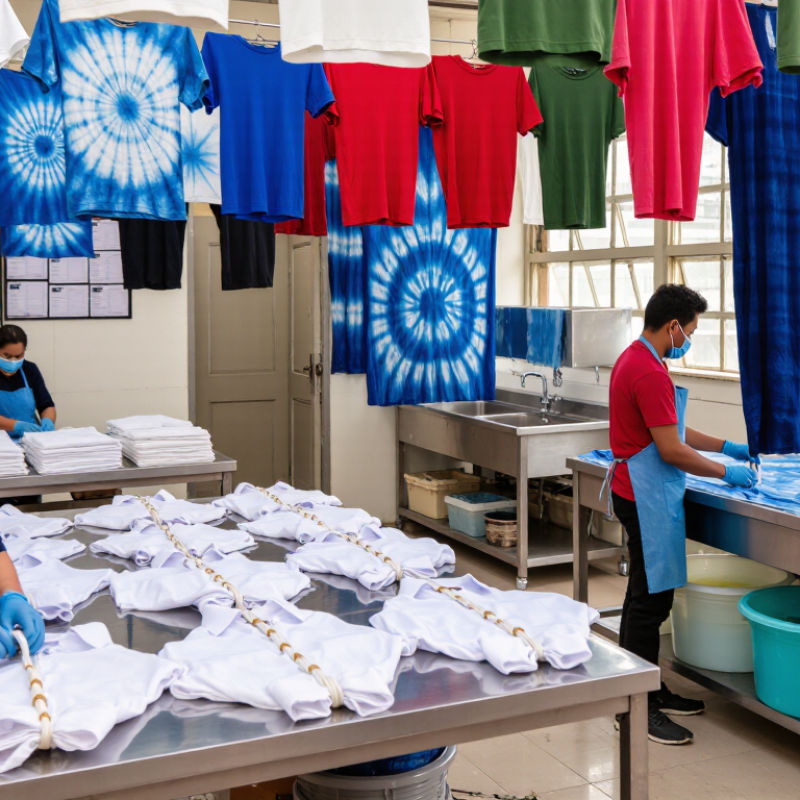
The step-by-step tie-dye manufacturing process starts with folding, twisting, or binding each panel.

Workers use measured bands to control the pattern while preserving handmade character. Dye is mixed according to tested formulas, then applied through squeeze bottles or controlled spraying. Small sample pieces are checked for color strength and bleeding. After application, the bundled tops rest in a warm curing area. This allows the dye to bond with the fibers. Timing matters. Too little curing weakens the shade.

The garments are opened carefully and washed several times.

Excess dye must be removed without damaging the fabric surface. Quality staff inspect seams, measurements, color balance, and print-like pattern placement. They also compare finished samples with approved standards.

A small irregularity is not always a defect. It can show the process was genuinely handmade. Still, uneven sleeves or unexpected fading require correction. Production records should note the cause, not hide it. That honesty improves future batches, although perfect consistency remains difficult.

Quality Control, Finishing, and Garment Inspection

Custom tie dye tops production depends on controlled variation, not random color. Each garment should be checked against an approved shade panel, fabric weight, seam quality, and print placement. Textile Exchange’s 2024 Materials Market Report states that global fiber production reached 124 million tonnes in 2023. That scale makes waste prevention a practical quality issue, not just an environmental concern.

Quality teams should inspect fabric before dyeing, then review color penetration after washing and drying. Uneven spirals, pale edges, loose threads, and dye migration need separate records. AATCC test methods can support colorfastness checks for washing, rubbing, and perspiration. Finishing also matters. Softening must not hide rough seams or weaken the fabric. It is a common mistake.

Garment inspection should sample measurements across sizes, while critical defects receive full checking. UNEP reports that textiles create about 2–8% of global greenhouse gas emissions, so correcting defects before shipment protects both resources and production costs. Still, tie dye cannot be perfectly identical. A slight shade drift may be acceptable when agreed in advance. The inspection standard must be clear, photographed, and signed before bulk production. Some factories rely too heavily on final checks. That deserves reconsideration. Controls should begin at fabric preparation, not at the packing table.

Packaging, Delivery, and Production Considerations

What Is Custom Tie Dye Tops Production?

Custom tie dye tops production involves more than applying color to fabric. The process includes artwork review, fabric selection, dye testing, sewing, curing, inspection, packaging, and delivery planning. Cotton jersey often absorbs dye well, but its weight affects drying time and final softness. A pre-production sample helps confirm the pattern, size measurements, and color balance before bulk work begins.

Packaging needs careful control. Each top should be fully dry before folding, or moisture may create odors and color transfer. Tissue paper, size stickers, and sealed bags can protect garments during handling. Cartons should not be overfilled. Compressed tops may arrive with deep creases. That detail is easy to miss.

Delivery planning should match the production schedule, not just the shipping date. A reliable supplier should confirm fabric availability, sample approval, curing time, inspection dates, carton dimensions, and tracking documents. Random checks can review stitching, stains, loose threads, print placement, and quantity. Color variation is still possible with hand-dyed products. It should be discussed honestly, with an approved reference sample and reasonable tolerance. Small errors happen. The process should allow time for rework, because rushing the final inspection can create larger problems. Customs information, packing lists, and product descriptions must also remain accurate for smoother delivery.

FAQS

What fabric is commonly used for custom tie-dye tops?

Cotton jersey is often selected because it absorbs dye well. Its weight affects drying time and softness. Testing still matters.

How is the fabric prepared before dyeing?

The fabric is prewashed to remove finishes that block dye absorption. It is then dried evenly. Damp spots can create pale patches.

How are tie-dye patterns created?

Workers fold, twist, or bind each garment panel. Measured bands help control spirals and stripes. Handmade character remains.

How is the dye applied?

Tested formulas are applied with squeeze bottles or controlled sprays. Small fabric samples check color strength and bleeding before production.

Why is curing important after dye application?

Bundled garments rest in a warm area during curing. This helps the dye bond with fibers. Too little time weakens the shade.

What does quality inspection include?

Inspectors check seams, measurements, color balance, loose threads, stains, and pattern placement. Washing and drying can reveal hidden problems.

Is every tie-dye top supposed to look identical?

No. Slight shade differences may be acceptable with an approved tolerance. Uneven sleeves or unexpected fading still require correction.

How should finished garments be packaged?

Tops must be completely dry before folding. Tissue paper and sealed bags can reduce color transfer. Overfilled cartons cause deep creases.

What should be confirmed before bulk production?

Confirm fabric availability, sample approval, curing time, inspection dates, carton sizes, and delivery documents. A signed reference sample helps.

What happens when defects appear before delivery?

The cause should be recorded, not hidden. Items may need rework or replacement. Rushing inspection creates larger problems.

Conclusion

Custom Tie Dye Tops Production refers to the organized process of creating personalized tie-dye shirts and tops according to specific designs, color themes, fabric requirements, and order quantities. It begins with design planning, where patterns, color combinations, sizing, and garment styles are confirmed. Suitable fabrics, such as cotton or blended materials, are then selected based on their softness, absorbency, durability, and intended use.

The manufacturing process typically includes preparing the fabric, folding or tying it to create the desired pattern, applying dyes carefully, allowing the colors to set, rinsing, washing, and drying the garments. Quality control follows to check color consistency, pattern accuracy, fabric condition, stitching, measurements, and overall appearance. After inspection, the tops may receive finishing treatments, labeling, folding, and protective packaging. Production planning should also consider lead times, minimum quantities, material availability, sampling, shipping arrangements, and clear communication throughout each stage.

Elowen

Elowen

Elowen is a dedicated marketing professional with a strong understanding of product strategy, customer needs, and responsible business communication. As a key contributor to the company’s content and marketing initiatives, Elowen regularly publishes insightful articles on the company website,......