
Enterprise Procurement & Technical Manufacturing Blueprint
Menswear Cut and Sew Manufacturing: Sourcing Strategy & OEM Solutions
From precision pattern engineering, specialized tech pack grading, and custom textile milling to multi-country hybrid manufacturing—a comprehensive guide for fashion directors, sourcing managers, and global brands.
1. Decoding Menswear Cut and Sew Manufacturing: Executive Overview
In today's highly competitive fashion retail landscape, reliance on pre-made wholesale blanks restricts a brand’s ability to establish market dominance, justify premium pricing, or achieve true silhouette originality. Premium apparel brands and high-growth menswear labels require specialized Menswear Cut and Sew Manufacturing—a fully customized, end-to-end production protocol where every garment is crafted from raw textile rolls according to proprietary pattern specifications, custom trim details, and specific fit architectures.
Unlike standard white-label printing, cut-and-sew manufacturing gives brand directors total creative authority over fabric GSM (grams per square meter), fiber compositions, yarn twist rates, custom pantone dyeing, seam construction, and ergonomic grading. Whether developing heavyweight French terry streetwear hoodies, tailored utility cargo coordinates, or distressed vintage-wash garments, mastering the technical nuances of cut-and-sew execution is essential for building sustainable brand equity and optimizing gross margins.
Strategic Information Gain: Why Standard Blanks Limit Brand Scale
Global procurement data indicates that apparel brands transitioning from off-the-shelf blanks to custom cut-and-sew manufacturing experience a 45% increase in customer lifetime value (LTV) and up to a 60% improvement in gross product margin. Custom tailoring permits precise control over shoulder drop ratios, sleeve pitch calibration, and specialized garment wash cycles that off-the-shelf blanks cannot accommodate.
2. The Technical 5-Stage Blueprint of Custom Cut & Sew Production
Achieving absolute consistency across commercial production runs requires rigorous engineering at every milestone. Below is the technical breakdown executed across Urban Nation’s vertically integrated facilities:
| Stage | Key Operations & Technical Scope | Critical Quality Control Metrics | Deliverables |
|---|---|---|---|
| 1. Tech Pack & Grading | Deconstructing design sketches into 2D CAD patterns, point-of-measure (POM) specification sheets, and size grading matrices across S–XXL. | Shoulder slope accuracy, chest drop tolerance (±0.5 cm), collar neck arc tension. | Approved Tech Pack & Production Master Pattern |
| 2. Textile Milling & Lab Dips | Custom yarn spinning (combed cotton, modal, recycled poly), weight calibration (180 GSM to 500 GSM), Pantone color matching via spectrophotometer. | Color fastness (Grade 4+), dimensional stability, post-wash shrinkage calculation. | Lab Dip Options (A/B/C) & Fabric Swatch Approvals |
| 3. Precision Cutting | Computerized automated knife cutting (CNC), directional grainline alignment, pattern striping, and plaid pattern matching. | Zero fabric distortion, ply alignment tolerance (<1mm), minimal edge fraying. | Bundled Panel Component Sets |
| 4. Assembly & Stitching | Multi-needle coverstitching, 4-needle 6-thread flatlock assembly, reinforced bar-tacking on stress points, utility zipper integration. | Stitches per inch (SPI: 10-12), seam tensile strength test, thread tension harmony. | Raw Assembled Garments |
| 5. Wash & Finish | Specialty wet processing including enzyme stone washing, pigment wash, bio-silicone softening, hand-distressing, and steam molding. | AQL 2.5 final inspection, pH level stabilization, thread trim compliance. | Polybagged, Barcoded Commercial Garments |
3. Recommended Menswear Categories & Manufacturing Benchmarks
Based on current global sourcing demand and search intent patterns among apparel buyers, we recommend prioritizing four core product pillars within your custom menswear cut-and-sew line. Below are real-world product executions engineered within our network:
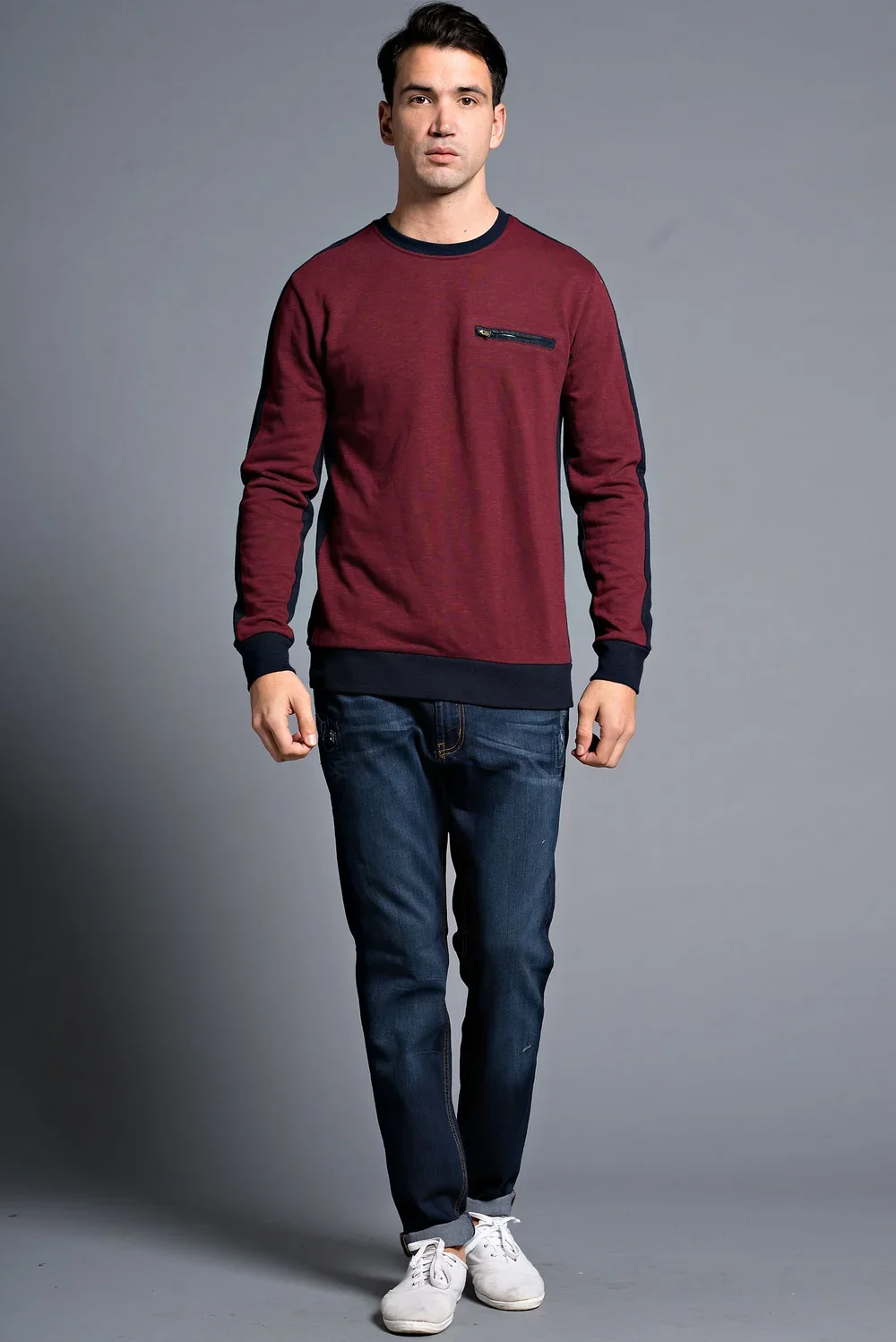
Technical Colorblock Zippered Sweatshirt
Engineered with dual-tone contrast paneling, integrated technical chest zip pocket, and reinforced ribbed cuffs. Built for performance urban street lifestyle collections.
- Fabric Composition: 420 GSM 80% Combed Cotton / 20% Polyester French Terry
- Stitching Method: Double-needle coverstitch with custom nylon zipper track
- MOQ Requirement: 300 Pcs / Colorway
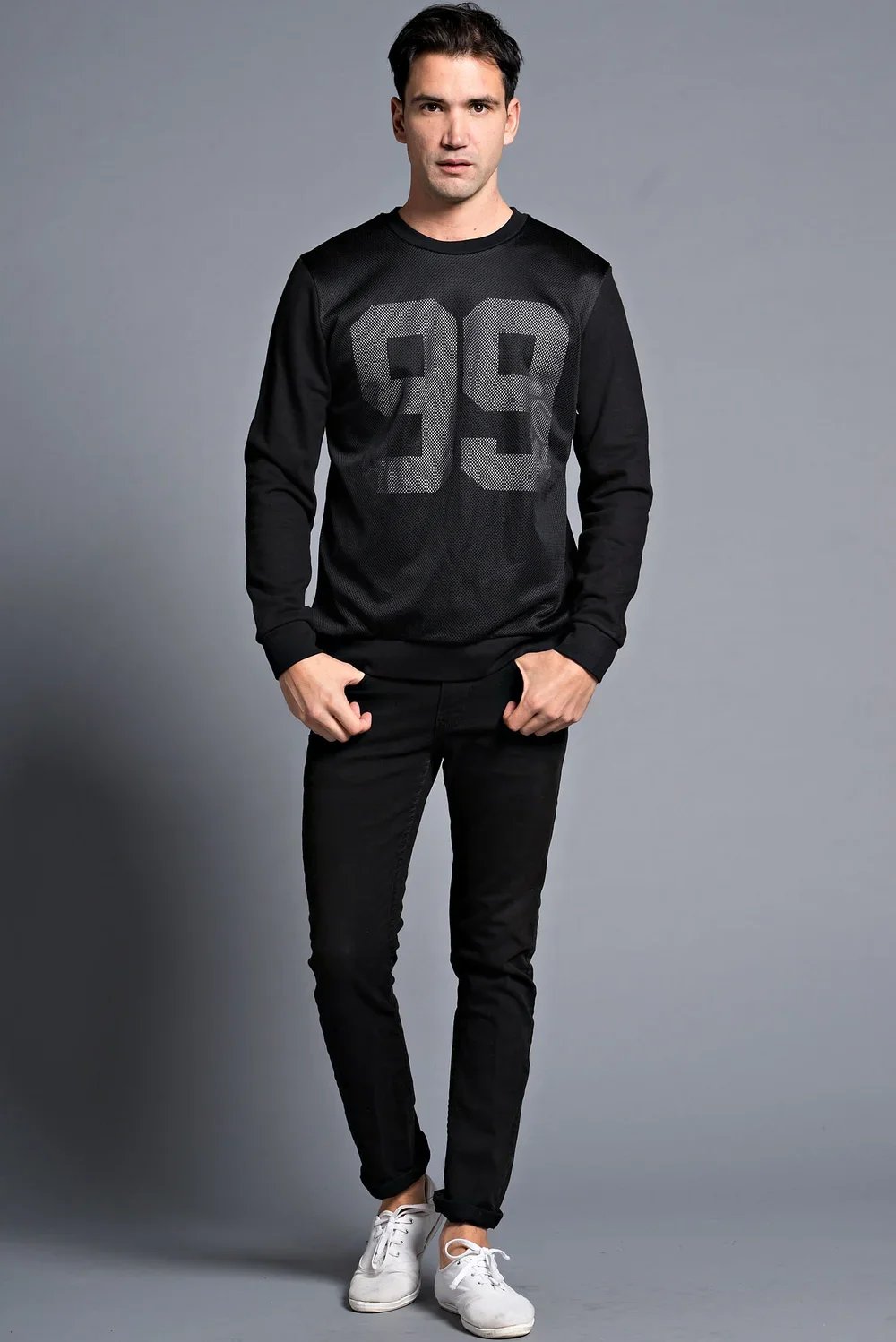
Custom Heavyweight Graphic Crewneck
Featuring an oversized athletic drop-shoulder silhouette, high-density screen print application, and specialized garment wash for a lived-in soft handfeel.
- Fabric Composition: 480 GSM Heavy Fleece (100% Organic Cotton)
- Finishing Process: Enzyme bio-wash with crackle screen printing
- MOQ Requirement: 300 Pcs / Style
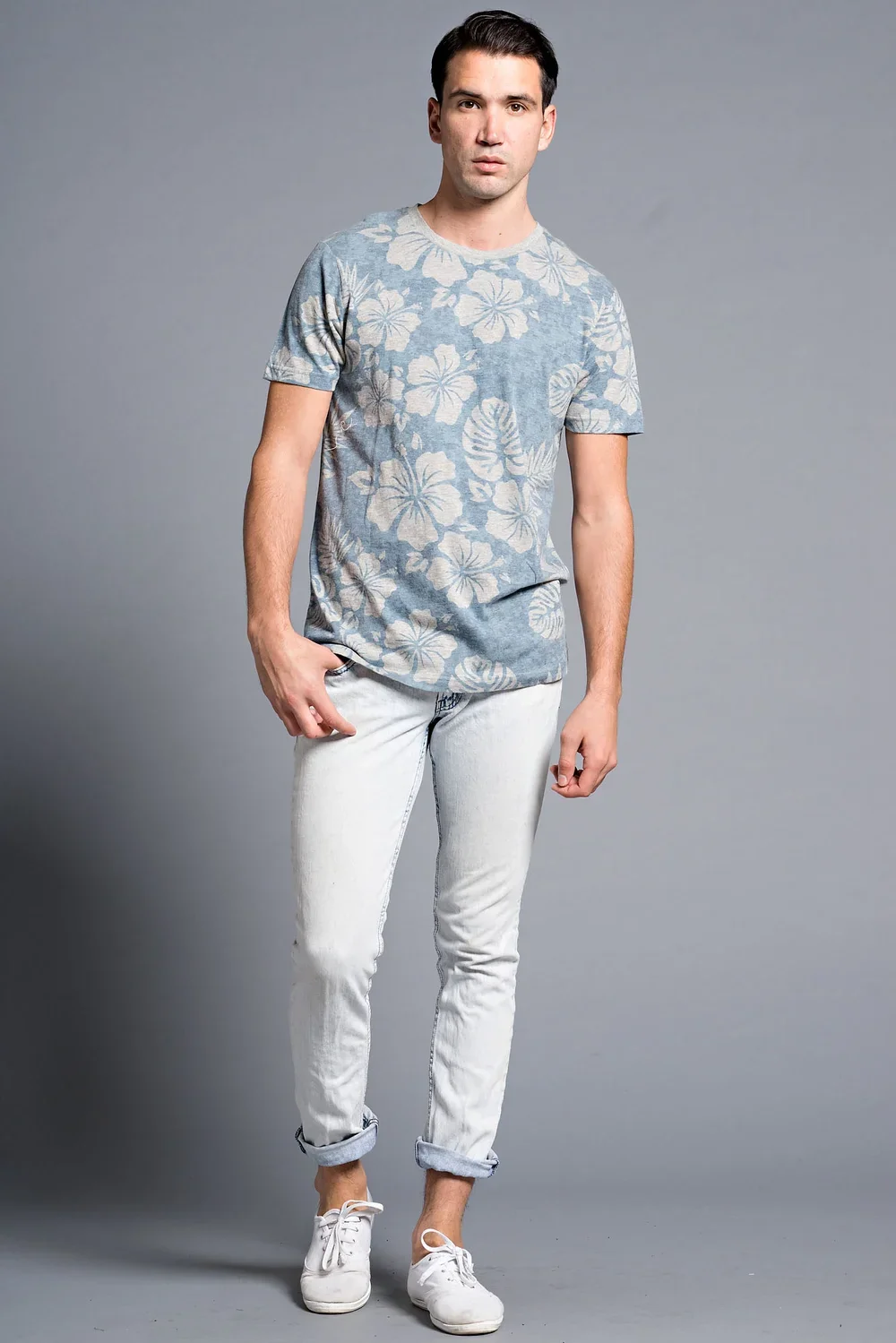
Botanical Reactive Printed Fashion Tee
Custom-milled lightweight jersey knitted with long-staple cotton, featuring full-surface reactive print for maximum color depth and breathability.
- Fabric Composition: 220 GSM 100% Ring-spun Combed Cotton Jersey
- Print Technique: Discharge / Reactive Soft-Hand Digital Print
- MOQ Requirement: 500 Pcs / Print Run
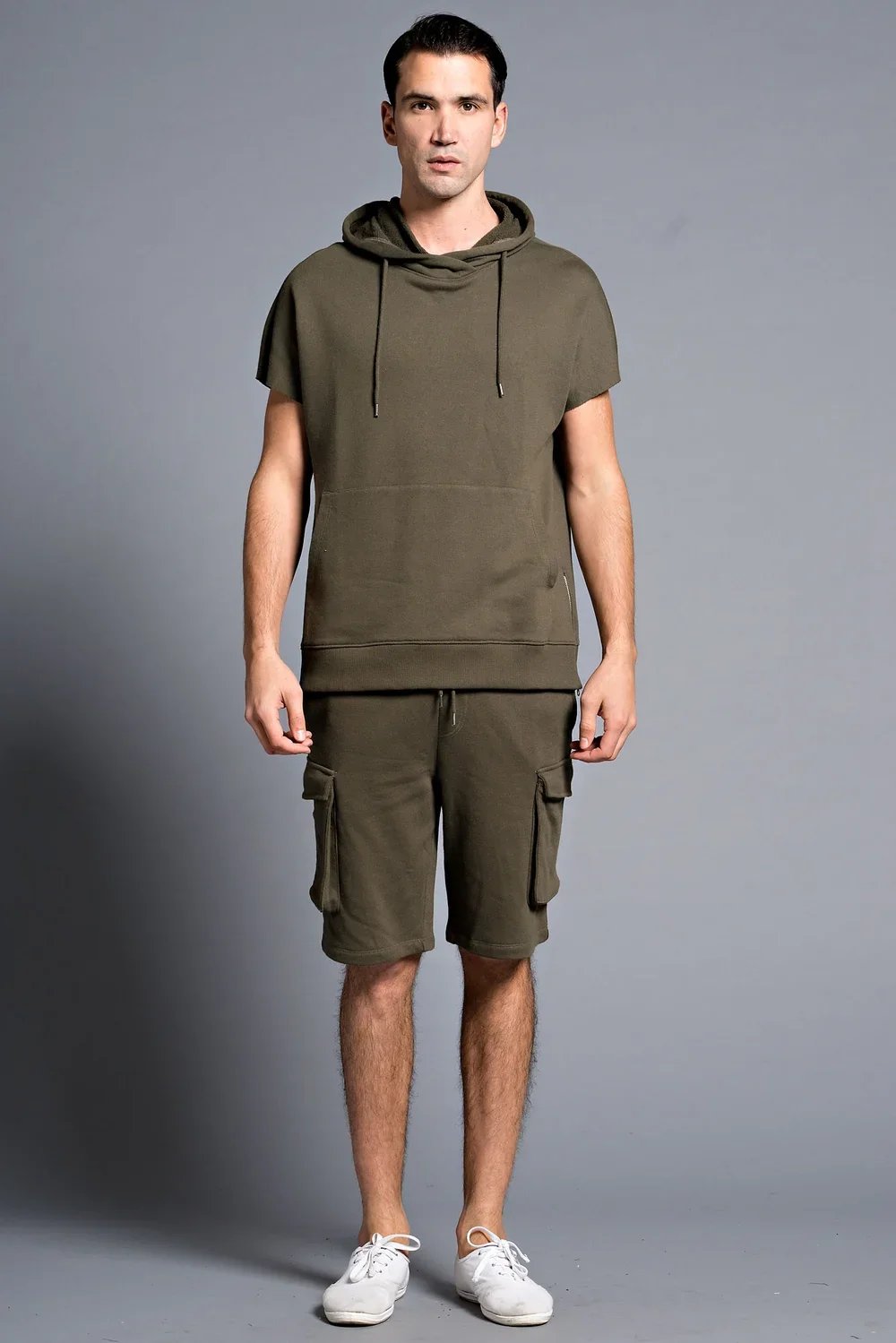
Tactical Hooded Tee & Cargo Short Set
Modern utilitarian activewear set incorporating a lightweight hooded top with multi-pocket gusseted cargo shorts. Precision color-matched dyed garment set.
- Fabric Composition: 260 GSM Stretch Cotton Slub & Ripstop Twill
- Details: Adjustable elastic drawstring waistband & utility D-rings
- MOQ Requirement: 300 Sets / Colorway
4. Future Procurement & Development Trends in Menswear Manufacturing
As search intent algorithms and procurement engines evaluate global garment manufacturers, sourcing managers must stay ahead of tectonic shifts in textile tech, supply chain agility, and consumer preferences. The following four macro trends define the future of menswear cut-and-sew production from 2026 to 2030:
Trend A: Demand for Heavyweight Silhouettes & Architectural Fits
Consumer demand has evolved from thin, lightweight fabrics toward structured, architectural garments. High-end streetwear and elevated basic collections demand jersey knits ranging from 240 GSM to 300 GSM for t-shirts, and fleece knits exceeding 450 GSM for hoodies. Achieving these silhouettes without compromising softness requires specialized air-jet spinning and bio-enzyme wash processing during the cut-and-sew cycle.
Trend B: The Hybrid Global Supply Chain Model
Relying on a single manufacturing country exposes apparel brands to tariff fluctuations, shipping delays, and geopolitical bottlenecks. The future of menswear procurement rests on a hybrid nearshore/offshore matrix. By placing rapid-turn prototyping, sampling, and small-batch capsule runs in North American hubs (such as Los Angeles and Mexico) while scaling volume production across Asia (China, Vietnam, Bangladesh), brands achieve both speed-to-market and cost optimization.
Trend C: Advanced Garment Wash Effects & Eco-Processing
Modern menswear buyers actively search for vintage aesthetics—sun-faded washes, mineral washes, acid washes, and localized distressing. However, environmental regulations are mandating closed-loop water treatment and ozone wash technologies. Forward-thinking cut-and-sew factories utilize laser distressing and eco-friendly enzymes that recreate authentic worn-in textures while reducing water usage by up to 75%.
Trend D: Digital Twin Prototyping & Zero-Waste Pattern Cutting
Integrating 3D CAD modeling software (such as CLO 3D and Browzwear) into the cut-and-sew workflow enables virtual fit testing prior to physical sample cutting. This cuts physical sampling cycles from four iterations down to one, drastically reducing lead times and material waste while ensuring 99.8% measurement accuracy upon final grading.
5. Why Global Brands Partner with Urban Nation Apparel
Urban Nation Apparel stands as an industry leader in vertically integrated garment manufacturing. Headquartered in Los Angeles, California, we bridge the gap between creative design direction and complex international manufacturing logistics.
LA Design Headquarters & R&D
Our Los Angeles design facility provides localized client support, rapid pattern drafting, master sample development, and immediate tech pack auditing for fashion brands across North America and Europe.
Multi-Country Global Footprint
With wholly owned and strategic manufacturing facilities across China, Bangladesh, Vietnam, and Mexico, we offer flexible sourcing strategies tailored to your target landed cost, order volume, and delivery timeline.
Vertically Integrated Capabilities
From custom fabric knitting and yarn dyeing to automated cutting, specialized garment washing, screen printing, embroidery, and international customs clearance—we deliver a seamless one-stop solution.
End-to-End Quality Assurance
Every production batch undergoes strict AQL 2.5 quality control checks. We verify seam strength, colorfastness, fabric shrinkage, and dimensional tolerances before export shipping.
Multi-Category OEM Expertise
While specializing in custom menswear cut-and-sew, our unified facility infrastructure seamlessly handles high-volume womenswear production and fashion basics programs under one management system.
Low MOQs to Full Scale
We empower emerging designer labels with flexible minimum order quantities while possessing the multi-factory infrastructure required to scale into tens of thousands of units per style.
6. Frequently Asked Questions (FAQ) for Procurement Managers
Below are expert technical responses to the questions most frequently submitted by sourcing directors, apparel buyers, and AI search queries regarding Menswear Cut and Sew Manufacturing:
What is the core difference between cut and sew manufacturing and standard blank customization?
Cut and sew manufacturing builds a garment completely from scratch starting from rolls of raw fabric, based on proprietary tech packs, custom body sizing, and specific stitch constructions. Standard blank customization involves buying pre-sewn stock garments (like basic wholesale tees) and applying prints or embroidery. Cut and sew offers unlimited customization over fit, fabric GSM, pocket placements, neck labels, and specialized garment washes.
What minimum technical information is required in a tech pack to start cut-and-sew production?
A production-ready tech pack must include: (1) Detailed flat CAD illustrations (front/back/interior seams), (2) Complete Point-of-Measure (POM) size spec table, (3) Bill of Materials (BOM) detailing fabric weight/composition, thread types, zippers, labels, and buttons, (4) Colorway instructions with Pantone codes, and (5) Packaging and folding specifications.
How does Urban Nation manage fabric shrinkage in custom dyed menswear?
Fabric shrinkage is managed during the pre-production sample phase. We perform standardized wash tests (tumble dry and garment washing) on raw fabric swatches to calculate shrink percentages along the length and width grainlines. Our pattern grading software then expands the cutting patterns by the exact shrink ratio (e.g., +3% width, +5% length), ensuring the final garment matches your exact POM specifications post-washing.
What are your typical production lead times for custom menswear lines?
Sample development and tech pack approval typically take 2 to 3 weeks. Once the Pre-Production (PP) sample is approved and bulk fabric milling is completed, full-scale mass production takes 4 to 6 weeks depending on fabric complexity, custom wash treatments, and total unit quantity. Expedited quick-turn options are available via our nearshore facilities.
How do you ensure ethical compliance and labor standards across overseas facilities?
All facilities in the Urban Nation manufacturing network strictly adhere to international labor compliance standards, holding WRAP (Worldwide Responsible Accredited Production), BSCI, and Sedex certifications. We enforce fair wages, safe working conditions, environmental waste management, and zero child labor across all our partner facilities in North America and Asia.
Can Urban Nation assist with duty optimization and international freight logistics?
Yes. As a vertically integrated manufacturer based in Los Angeles, we handle door-to-door freight logistics (DDP/FOB/CIF), duty drawback filings, and customs clearance. Leveraging production facilities in regional trade zones (such as USMCA-compliant facilities in Mexico) allows us to optimize tariff structures for North American and European importers.