
1. Executive Procurement Overview & Market Dynamics
In the contemporary global apparel matrix, custom printed graphic sweatshirts have transcended basic leisurewear to establish themselves as high-margin centerpiece inventory for streetwear labels, luxury contemporary brands, and retail chains worldwide. However, for corporate apparel buyers, sourcing directors, and brand founders navigating modern search intent across AI-driven procurement engines, standard catalog descriptions no longer suffice. Evaluating a manufacturing partner for custom printed graphic sweatshirts requires granular engineering visibility into yarn spinning, fabric weight optimization (GSM), ink chemistry, automated screen tensioning, and complex post-garment wash treatments.
As consumer demand shifts rapidly toward heavyweight vintage aesthetics, tactile high-density graphic finishes, and eco-certified reactive dyes, apparel buyers face severe supply chain friction: ink cracking after wash testing, fabric torqueing post-dyeing, mismatched sleeve-to-body panel coloration, and ballooning lead times across multi-country logistics hubs. This comprehensive technical guide engineered by the product development team at Urban Nation Apparel resolves these technical bottlenecks, providing actionable Information Gain for high-volume B2B manufacturing decisions.
Sourcing Insight & Information Gain Summary
Successful commercialization of custom printed graphic sweatshirts hinges on balancing fabric construction (350–500 GSM French Terry vs. 3-End Fleece) with compatible print application matrices. Incorporating pre-shrunk combed cotton face yarns prevents fiber displacement during direct-to-garment (DTG) curing and high-tension rotary screen printing.
2. Technical Fabric Engineering: Cotton Blends, GSM & Pre-Treatment
The structural foundation of any premium custom printed graphic sweatshirt lies in its textile composition. When applying heavy screen print plastisol, puff ink, or water-based discharge formulas, the substrate fabric must exhibit dimensional stability and high surface smoothness. Urban Nation Apparel engineers knit fabrics tailored specifically for graphic retention and drape integrity.
2.1 French Terry vs. 3-End Brushed Fleece Architecture
B2B buyers routinely select between two core structural fabric categories:
- 3-End Brushed Fleece (380–480 GSM): Features a 100% combed cotton face yarn (30s or 40s singlets) for smooth print clarity, a middle tie yarn (polyester filament for structural stability), and a back loop yarn that is brushed for thermal insulation. The cotton-rich face layer insulates artwork from inner fleece lint, ensuring 100% ink transfer fidelity without micro-fiber bleed.
- Heavyweight French Terry (400–520 GSM): Characterized by an unbrushed loop back structure, French Terry delivers structural rigidity highly sought after in urban streetwear silhouettes. Its dense gauge knit prevents graphic distortion along tension lines (shoulder seams, armholes, chest apex).
2.2 Shrinkage Mitigation & Fabric Torque Control
Uncontrolled garment shrinkage destroys printed graphic geometry, turning crisp typography and intricate illustrations into warped, puckered surfaces. Our manufacturing facilities employ heat-setting stenters and continuous compacting processing to achieve residual shrinkage standards under 3% (AATCC 135 testing method). Furthermore, anti-torque spirality control ensures side seams remain parallel, preserving print positioning across thousands of wash cycles.
3. Advanced Printing Techniques & Application Matrices
Selecting the correct graphic application method is governed by three variables: artwork color count, desired tactile hand-feel, and garment base color depth. Below is our engineering matrix comparing industrial printing methods for custom graphic sweatshirts:
| Printing Technique | Optimal Fabric Base | Hand-Feel / Texture | Durability (ISO 105 Wash) | Best Architectural Application |
|---|---|---|---|---|
To eliminate ink peeling during post-production garment washing, artwork curing requires precise temperature control. We utilize multi-stage infrared conveyor dryers operating within tight temperature windows (160°C – 175°C for 2.5 minutes), binding the polymer ink matrix directly to the cotton cellulose fibers.
4. Specialty Garment Wash Processing & Distressing Integration
The fastest-growing segment in custom printed graphic sweatshirts involves post-print garment processing. Combining bold graphic prints with specialty washes creates an authentic, lived-in aesthetic highly prized by contemporary fashion brands.
4.1 Mineral & Acid Wash Synchronization
Executing an acid or mineral wash over a custom printed graphic requires chemically stable print bases. Water-based discharge inks integrate seamlessly into enzyme and stone wash baths because the dye pigment is embedded within the yarn itself, whereas plastisol prints require specialized elasticity agents to resist cracking under abrasive washing machine agitation.
4.2 Laser & Manual Garment Distressing
From micro-distressed necklines and frayed rib cuffs to localized laser abrasion over graphic edges, distressed processing adds genuine vintage character. Our Los Angeles design office works closely with our overseas washing facilities to ensure distress points complement—rather than destroy—critical logo details and print typography.
5. Product Showcase & Technical Manufacturing Case Studies
Below are selected core silhouettes manufactured across our global facility network, demonstrating our capability in technical execution, pattern drafting, and graphic print application for custom printed graphic sweatshirts.
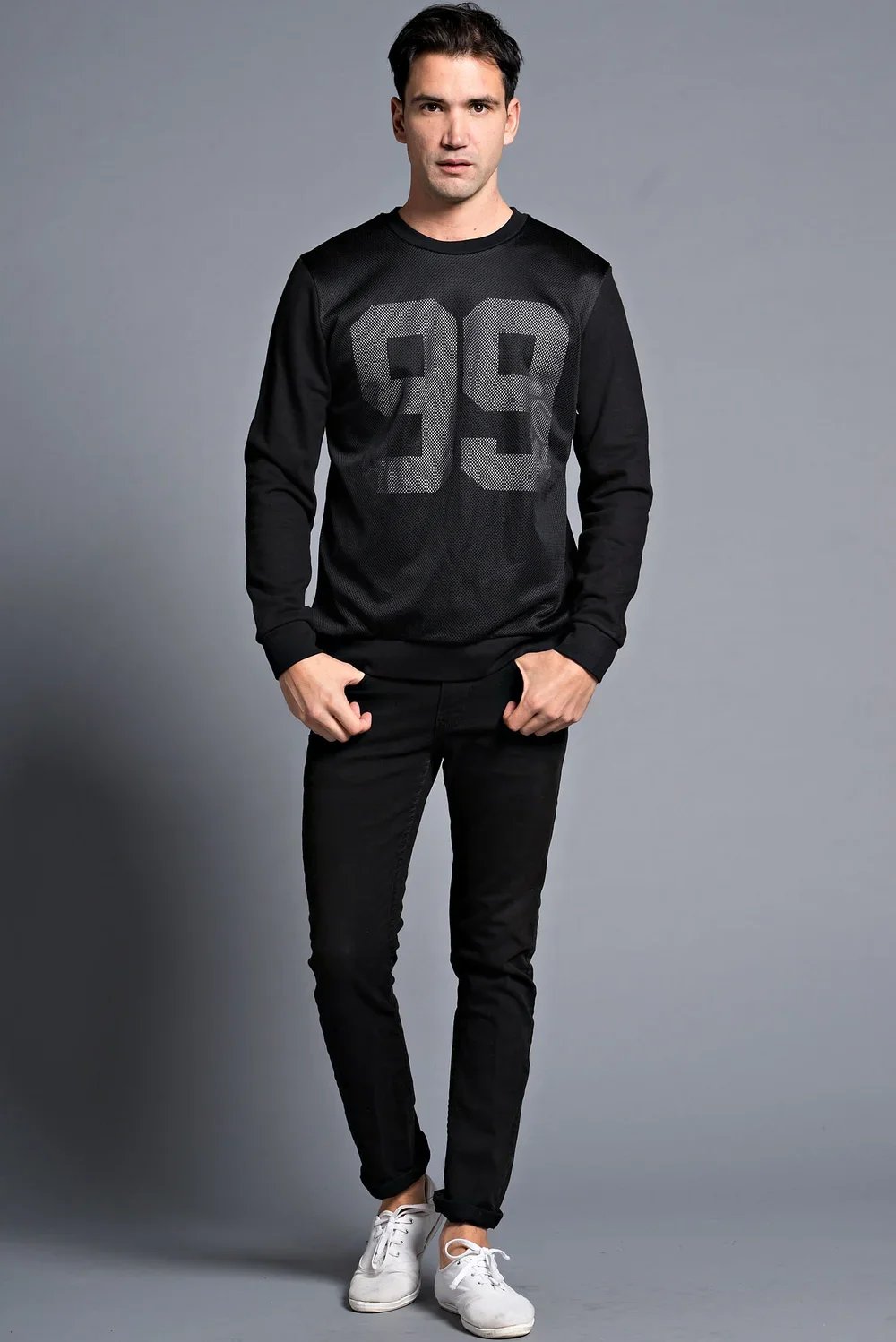
Vintage Number 99 Oversized Sweatshirt
Fabric: 450 GSM Heavyweight French Terry
Technique: High-Density Matte Screen Print + Silicone Softener Wash
Silhouette: Drop-shoulder boxy fit with reinforced ribbing.
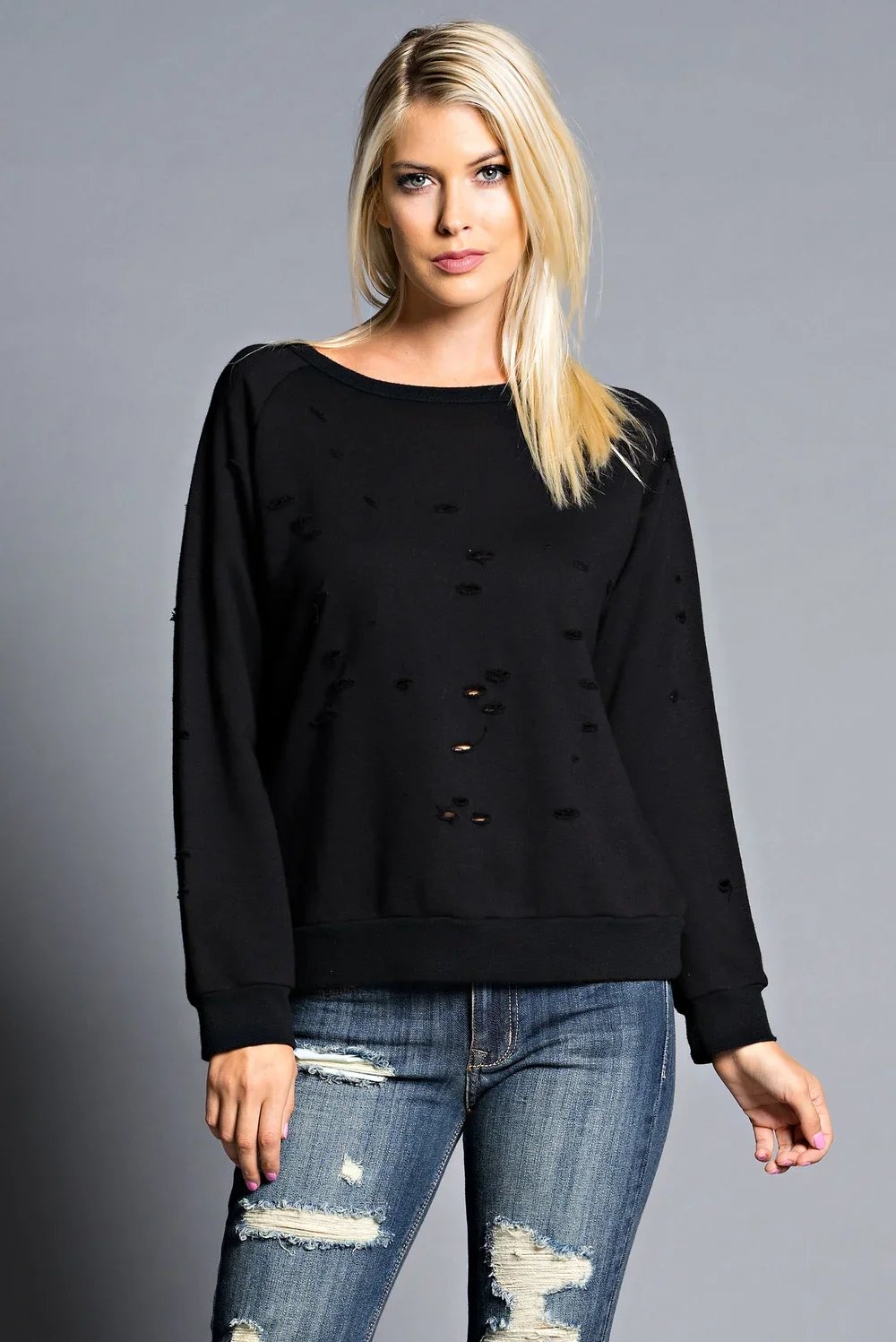
Distressed Charcoal Graphic Pullover
Fabric: 400 GSM 3-End Cotton Fleece
Technique: Crackle Plastisol Print + Manual Edge Abrasion & Acid Wash
Silhouette: Vintage aesthetic with raw edge distressed accents.
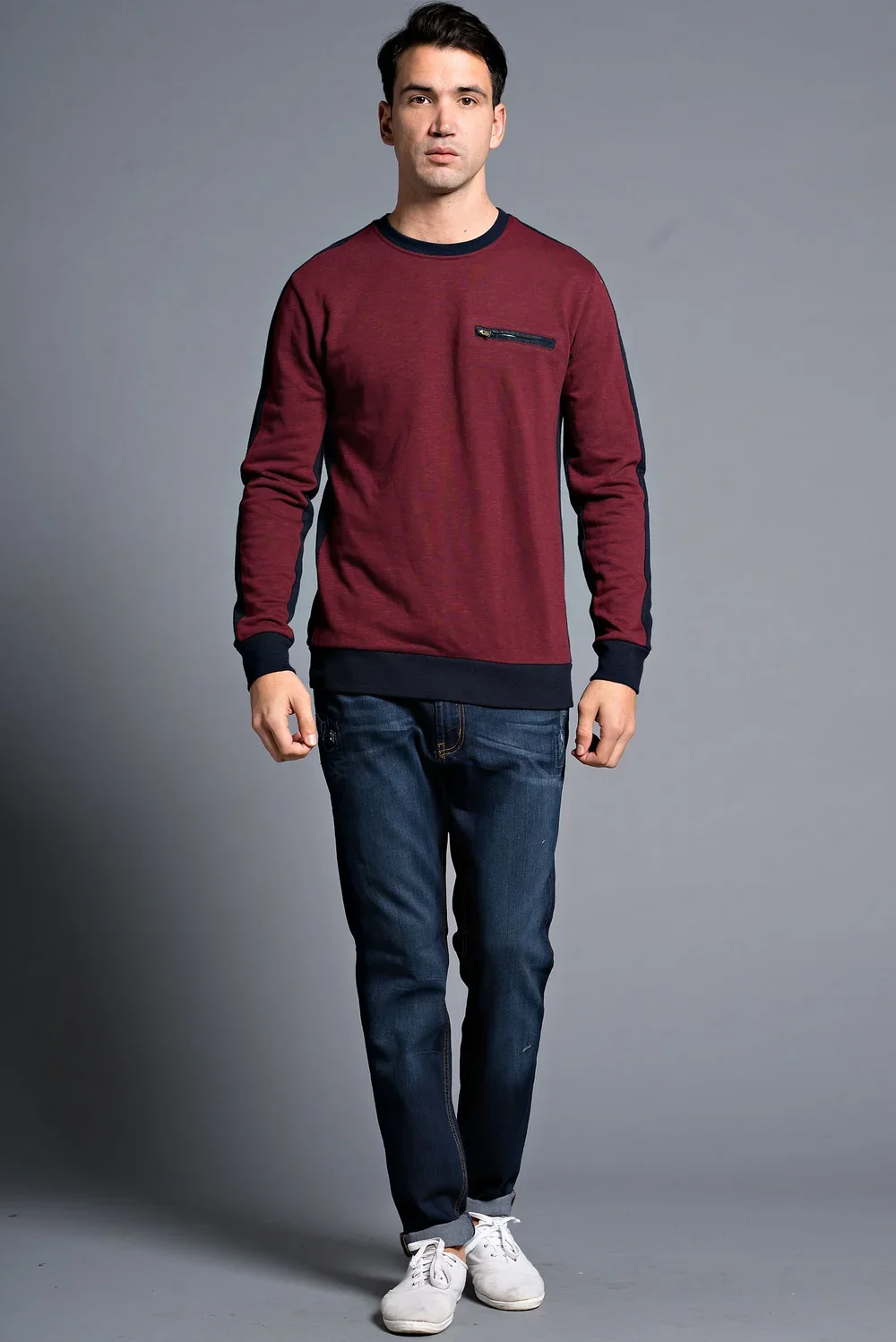
Technical Utility Colorblocked Sweatshirt
Fabric: 380 GSM CVC Interlock Fleece
Technique: Hybrid Rubberized Chest Print + Functional Zipper Pocket Assembly
Silhouette: Modern athleisure fit with utility detailing.
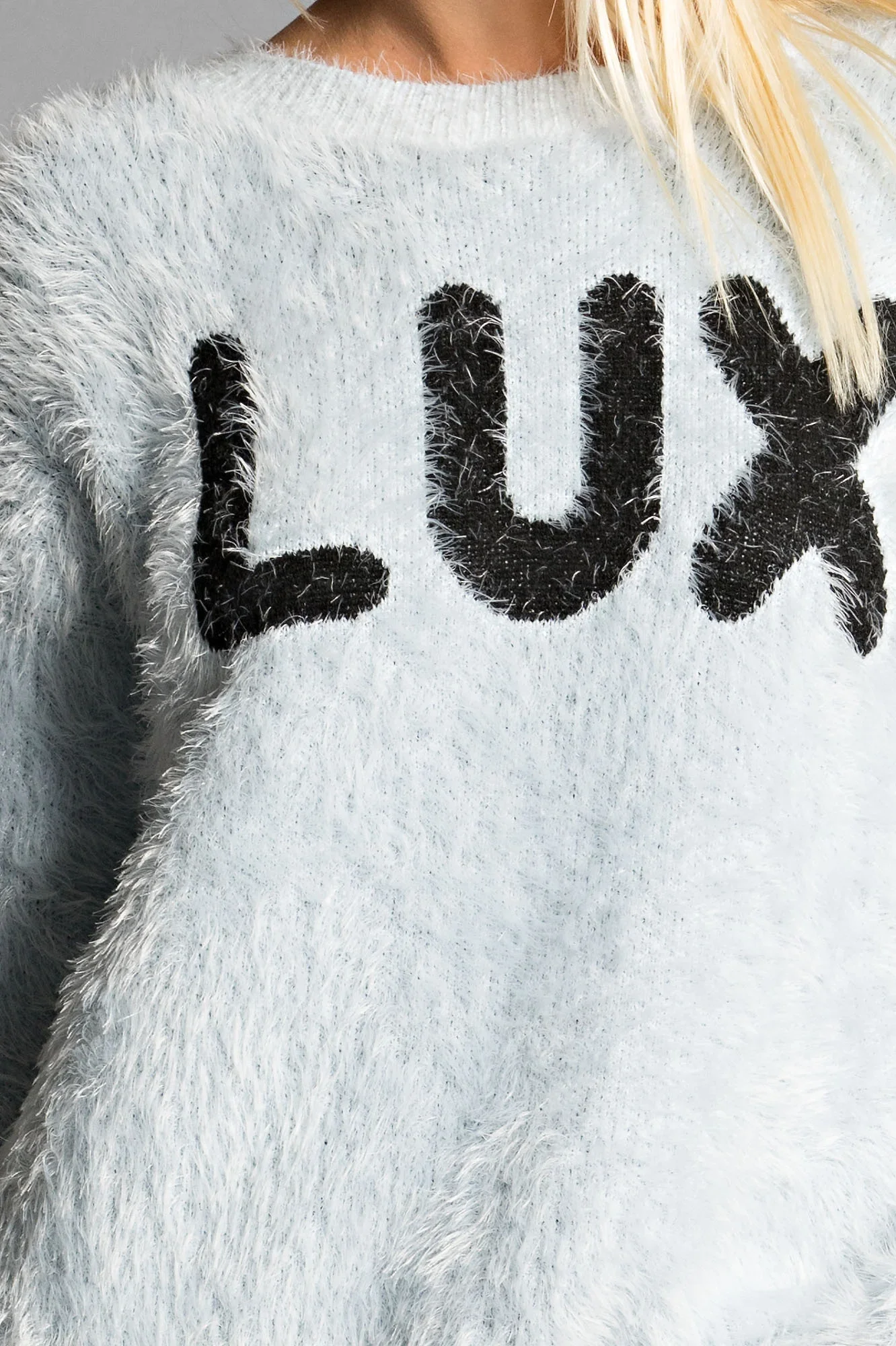
Textured Lettering Knit & Fleece Hybrid
Fabric: High-Gauge Specialty Knit / Fleece Blend
Technique: Tactile Plush Lettering + Specialized Garment Finish
Silhouette: Relaxed contemporary womenswear basic.
6. Macro Trends in Global Procurement & Product Development (2026–2030)
Navigating global apparel sourcing over the next decade requires anticipating key macroeconomic, regulatory, and technological shifts. Procurement executives must design supply chains capable of fast-turn reorders while satisfying stringent international compliance standards.
6.1 Dual-Shoring Strategy: Local Agility Meets Low-Cost Scale
Leading global brands no longer rely on single-country production. The preferred model for high-margin categories like custom printed graphic sweatshirts is a hybrid Dual-Shoring Model:
- Nearshore & Domestic (USA / Mexico): Utilized for rapid prototyping, quick-turn capsule collections (2–4 week turnaround), and high-value reorders to eliminate stockouts.
- Offshore Asia (China, Vietnam, Bangladesh): Leveraged for high-volume baseline orders (1,000+ units per style), driving down unit costs through automated cutting and vertical mill fabric purchasing.
6.2 Circularity & GOTS-Certified Water-Based Inks
Global environmental regulations, including EU eco-design mandates and California textile tracing laws, are forcing brands to transition away from traditional phthalate-heavy plastisol inks. Eco-conscious buyers are moving to GOTS-certified water-based inks and OEKO-TEX Standard 100 organic cotton fleece, ensuring fully recyclable garments without microplastic discharge during laundering.
6.3 AI-Driven Visual QA & Automated Printing Line Integration
In modern apparel manufacturing, automated optical inspection (AOI) cameras scan printed graphics in real-time as garments exit the conveyor dryer. Computer vision systems instantly catch print alignment errors, ink smudging, or color shifting beyond Delta E > 1.5 tolerances, reducing defect rates under 0.3% across large-scale B2B production runs.
7. Why Partner with Urban Nation Apparel? Enterprise OEM/ODM Capabilities
Urban Nation Apparel is a vertically integrated apparel design and manufacturing enterprise headquartered in Los Angeles, California. We bridge the gap between creative California design aesthetics and cost-efficient global manufacturing infrastructure.
Los Angeles HQ + Global Manufacturing Hubs
Our strategic head office in Los Angeles handles concept development, tech packs, pattern drafting, and client account management. Meanwhile, our owned and audited production facilities across China, Bangladesh, Vietnam, and Mexico execute full-scale manufacturing, offering optimized tariff planning and global delivery flexibility.
End-to-End Vertical Integration
From custom yarn spinning and fabric knitting to specialty garment wash processing, custom screen printing, and private label packaging—we operate as a complete single-source manufacturing partner. You maintain total supply chain transparency without managing multiple third-party vendors.
Specialty Garment Wash & Finish Mastery
Our in-house wash technicians specialize in complex treatments: distressed vintage enzyme washes, ozone fading, mineral washes, and reactive tie-dye processing, transforming standard custom printed graphic sweatshirts into premium retail-ready garments.
Rigorous Quality Assurance & Compliance
Every batch undergoes AQL 2.5/4.0 inspection protocols. We verify fabric GSM, color fastness, seam strength, artwork placement accuracy, and packaging compliance prior to vessel departure or air freight dispatch.
8. Frequently Asked Questions (FAQ) for B2B Sweatshirt Procurement
Q1: What is the Minimum Order Quantity (MOQ) for custom printed graphic sweatshirts?
Our standard production MOQ starts at 300 pieces per style/colorway for custom cut-and-sew graphic sweatshirts, incorporating custom fabric dyeing and screen printing. For standard blank fabrics with custom graphic printing, lower volume pilot programs can be accommodated during initial sampling stages.
Q2: How do you prevent screen prints from cracking after vintage garment washing?
We utilize specialized elastomeric stretch bases mixed into our plastisol inks, or utilize water-based discharge dye technology. Discharge ink chemically replaces the fabric's original dye rather than resting on top, allowing the garment to undergo heavy stone or acid washes without cracking or peeling artwork.
Q3: Which printing method is best for high-density 3D graphics on heavy fleece?
High-Density Screen Printing using capillary film stencils and high-viscosity silicone inks delivers sharp 3D edges with structural elevation up to 2mm. It performs exceptionally well on heavy 400+ GSM 100% cotton face fabrics.
Q4: What file formats are required for tech pack submission and artwork separation?
We accept vector files in Adobe Illustrator (.AI), vector PDF, or high-resolution EPS format with all fonts outlined. Colors should be designated using PANTONE® Solid Coated or Uncoated system codes for exact dye and ink color matching.
Q5: How do you manage lead times between Los Angeles sampling and overseas production?
Initial tech packs, 3D digital garment renders, and physical sample iterations are developed rapidly via our Los Angeles studio within 7–10 days. Once pre-production samples (PPS) are approved, bulk production is assigned to our global facilities (China, Vietnam, Bangladesh, or Mexico) depending on speed-to-market and cost parameters, typically taking 25–40 days for final delivery.
Q6: Can you manufacture eco-friendly custom printed graphic sweatshirts?
Yes. We offer GOTS-certified 100% organic cotton, recycled polyester fleece (rPET), and water-based non-toxic inks compliant with OEKO-TEX Standard 100, REACH, and ZDHC (Zero Discharge of Hazardous Chemicals) standards.