
Insights & Resources

Apparel Manufacturing Blog

Industry news, production guides, and trend analysis from Los Angeles clothing experts.

0%

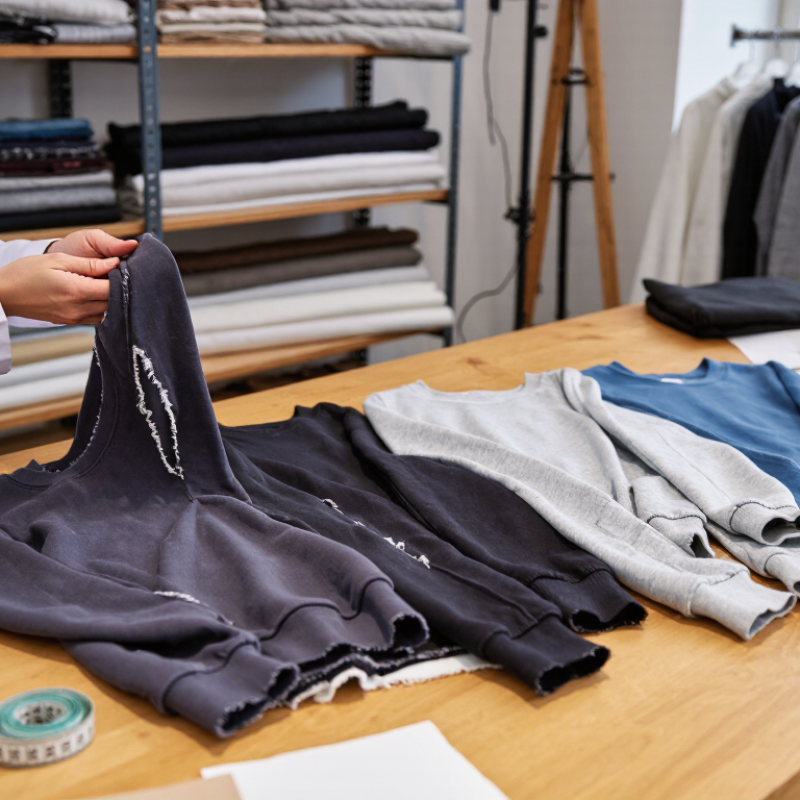
Distressed Sweatshirt Manufacturing requires more than a convincing worn-in look. Buyers need to assess fabric weight, fleece recovery, seam strength, and how each finish behaves after washing. A pale abrasion on a charcoal sleeve can look subtle in a sample, then spread after production. Small details matter.

For this introduction, apparel-development specialist Elena Brooks is an illustrative expert voice, not a sourced interview. Her guiding line is: “A distressed finish should look intentional before it looks aged.” That distinction helps buyers compare manufacturers beyond photographs. Ask how distressing is specified, sampled, inspected, and kept consistent across sizes and repeat orders. Request a wash-tested sample, clear placement references, and written approval points. Still, a sample cannot reveal every production variation. Buyers should leave room for practical review.

This guide examines manufacturers serving global buyers, with attention to customization, production communication, quality controls, and sourcing transparency. It also considers details that are easy to overlook: rib recovery at the cuffs, color variation between fabric lots, and whether distress marks remain balanced across a full size run. Not every supplier will suit every brief. A low quote may omit finishing steps; a polished catalog may show only its best sample. Compare evidence, not promises. The goal is a sweatshirt that feels worn by design, holds its shape, and arrives close to the approved reference.
Top Distressed Sweatshirt Manufacturers for Global Buyers

Distressed Sweatshirts: Fleece Types and Common 280–400 GSM Weights

Distressed sweatshirt sourcing begins with the fleece construction, not just the surface treatment. Brushed fleece has a soft, raised inner face and suits substantial, warm garments. French terry keeps visible loops inside, giving a cleaner, often less bulky feel. Cotton-polyester blends are common, but fiber content alone does not predict softness or durability. Textile Exchange’s Materials Market Report 2024 estimates global fiber production reached 124 million tonnes in 2023, with polyester accounting for 57%. That scale makes blend composition worth checking carefully.

GSM means grams per square metre, a useful comparison when reviewing samples. In the 280–400 GSM range, 280–320 GSM can offer easier layering and a softer drape, while 350–400 GSM usually feels denser and holds a more substantial silhouette. Heavy does not always mean better. A thick brushed fleece may feel warm but can be less comfortable in mild climates; French terry at a similar weight may hang differently. Ask suppliers for measured GSM, fiber percentages, and construction details, then compare washed samples. Distressing can change the surface appearance, so inspect cuffs, seams, and worn areas after laundering. Small differences show. A practical caution: sample measurements may vary slightly by lot, and buyers should confirm tolerances before placing bulk orders.

Distressed Sweatshirt Fabric Weights by Fleece Type

Typical fabric weight ranges for common sweatshirt fleece types, shown in grams per square metre (GSM).

These ranges are indicative sourcing benchmarks, not fixed specifications. Actual GSM varies by construction, fiber blend, finishing, and supplier; confirm the target weight with a fabric swatch or product specification.

How Abrasion, Bleaching, and Enzyme Washing Create Distressed Effects

Distressed sweatshirts are shaped by controlled wear, not random damage. Abrasion uses stones, sanding tools, or brushing to soften raised areas and expose lighter fibers. On a washed charcoal sweatshirt, the elbows and pocket edges may fade first. The amount of pressure matters. Too much can thin the fabric or create holes where none were planned.

Bleaching changes color through carefully measured treatment. It can produce cloudy highlights, pale seams, or an overall sun-faded tone. Results depend on the original dye, fabric composition, and processing conditions, so a lab dip alone may not tell the whole story. Enzyme washing uses enzymes to remove loose surface fibers, giving fleece a softer hand and a gently worn appearance. The effect is often subtler than abrasion. Small details matter.

For global buyers, a capable manufacturer should explain how each finish affects garment strength, shade consistency, and repeat orders. Ask for samples made with the intended fabric and wash recipe, then inspect seams, cuffs, and high-friction areas after laundering. Check that the supplier follows appropriate chemical handling and wastewater controls. A worn look can vary from batch to batch, especially when several treatments are combined. The result can still feel too uniform; that is worth acknowledging, not hiding. Clear reference samples and written finish tolerances help teams decide how much variation they can accept.

Compare Manufacturers by MOQ, Lead Time, Certifications, and Export Capacity

For distressed sweatshirts, compare manufacturers on measurable controls, not sample-room drama. Ask for separate MOQs for garment bodies, wash recipes, and custom trims. A 300-piece garment MOQ may rise when two shades require separate dye lots. Request a written lead-time calendar covering knitting, sewing, distressing, wash testing, and final inspection. Short quotes often omit rework. That matters.

Certification claims should match the product and facility. Check the certificate’s current scope, site name, and expiry date. Confirm whether it covers the fabric, processing, or finished garment.

Textile Exchange’s Materials Market Report 2024 estimated global fiber production at 124 million tonnes in 2023, with polyester accounting for 57%. This scale makes fiber-content records and lot-level traceability practical screening questions. Still, a certificate cannot prove every batch was handled perfectly.

Export capacity needs evidence: monthly output by style, carton dimensions, booking history, and recent on-time shipment data. The World Bank’s Logistics Performance Index 2023 assessed 139 economies across six dimensions, including customs, infrastructure, and timeliness. Use it to understand a factory’s shipping corridor, not to rank the factory by its country score.

A pilot order with dated checkpoints can reveal wash inconsistency under neutral light. I would not treat a polished sample as proof of repeatability; factories can miss here, especially after a wash formula changes. Make the first bulk run closely documented.

Inspect Orders with AQL 2.5 Sampling and ISO 105-C06 Colorfastness Tests

Top Distressed Sweatshirt Manufacturers for Global Buyers

Distressed sweatshirts need more than a convincing worn appearance. Buyers should inspect fabric weight, seam strength, print placement, and abrasion consistency. During production reviews, I compare pieces from different cartons, not only the first approved sample. This often reveals uneven fading, loose threads, or misplaced holes. Small differences matter.

AQL 2.5 sampling gives buyers a structured method for checking finished orders. It does not mean that 2.5% of goods are automatically acceptable. The inspection level, lot size, and defect classification must be agreed before production. Inspectors should record critical, major, and minor defects separately. Photos improve traceability. Clear records help resolve disputes between factories and buyers.

Color performance also requires laboratory evidence. ISO 105-C06 tests colorfastness during domestic or commercial laundering. Test results can show color change and staining on adjacent materials. For distressed styles, planned fading should remain controlled after washing. I recommend testing the actual production fabric, trims, and printed areas. A substitute swatch may give misleading confidence. That mistake is common.

Factories should provide inspection reports, test conditions, and sample identification. Buyers can then compare results across production lots. Still, one inspection cannot replace supplier monitoring. Wash variation, lighting, and manual finishing may affect appearance. Some judgment remains necessary. That part is imperfect. Reasonable buyers allow controlled variation, while rejecting careless inconsistency.

Evaluate Pricing, Customization, and Shipping for Global Buyers

Top Distressed Sweatshirt Manufacturers for Global Buyers

When comparing distressed sweatshirt manufacturers, study the full landed cost, not only the unit price. A 320gsm cotton fleece sweatshirt may cost more, but it can reduce returns caused by thin fabric. Request pricing at different quantities, such as 100, 500, and 1,000 pieces. Confirm whether washing, fading, holes, labels, and packaging are included. A low quote can look attractive. It may hide sampling, tooling, or inspection fees.

Customization needs clear technical control. Ask for a size chart, fabric composition, color standard, distressing placement, and approved pre-production sample. Small details matter, especially around cuffs and shoulder seams. Experienced manufacturers should explain shrinkage, colorfastness, and production tolerances. I would not trust digital images alone. A sample can still differ from bulk production, so a final inspection remains worthwhile. This is an area where buyers sometimes expect perfection too early.

Tips: Compare the delivered cost, not just the factory price. Check minimum order quantities and production lead times. Ask for carton dimensions, shipping weight, and export documents before placing an order. Choose sea freight for large, stable orders and air freight for urgent samples. Build extra time for customs clearance. My own evaluation would include a small trial order first; it is slower, but often reveals problems that polished quotations conceal.

FAQS

What does GSM mean for a distressed sweatshirt?

GSM means grams per square metre. At 280–320 GSM, a sweatshirt often layers more easily. At 350–400 GSM, it usually feels denser and holds a fuller shape. Heavy is not always better.

How do brushed fleece and French terry differ?

Brushed fleece has a soft, raised inner surface and often feels warmer. French terry has visible loops inside and can feel less bulky. Compare washed samples; similar weights may drape differently.

Does fiber content predict softness and durability?

Not by itself. Cotton-polyester blends are common, but construction also affects feel and wear. Check fiber percentages and fabric details. The label alone cannot tell the whole story.

What should buyers check in a production inspection?

Compare pieces from several cartons. Check fabric weight, seam strength, print placement, loose threads, and distressing consistency. Small differences show. Record defect types and keep clear photos.

What does AQL 2.5 mean?

It is a sampling method, not a promise that 2.5% of goods are acceptable. Agree on lot size, inspection level, and defect categories before production. Photos help.

How can colorfastness be checked?

ISO 105-C06 tests color change and staining during laundering. Test the actual production fabric, trims, and printed areas. A substitute swatch may give false confidence.

What costs should a sweatshirt quote include?

Compare the full delivered cost, not just the unit price. Ask whether washing, labels, packaging, sampling, inspection, and tooling are included. A low quote may hide extra fees.

What details should be approved before ordering?

Confirm the size chart, fabric composition, color standard, distressing placement, and pre-production sample. Check shrinkage and production tolerances too. Digital images are not enough.

Which shipping method suits different orders?

Sea freight can suit large, stable orders; air freight can suit urgent samples. Confirm carton dimensions, shipping weight, and lead times. Leave extra time for clearance. A small trial order may reveal issues, though it slows the process.

Conclusion

This guide explores Distressed Sweatshirt Manufacturing for global buyers, covering the fleece types commonly used in heavyweight and midweight garments, including typical 280–400 GSM options. It explains how abrasion, controlled bleaching, and enzyme washing create authentic worn-in effects while maintaining fabric strength, comfort, and consistent appearance. Buyers will also learn how to compare manufacturers based on minimum order quantities, production lead times, certifications, quality systems, and export capabilities.

The article further outlines practical order inspection methods, including AQL 2.5 sampling and ISO 105-C06 colorfastness testing. It also examines the key factors behind total purchasing costs, such as fabric selection, distressing complexity, customization, packaging, freight, and delivery terms. By assessing quality controls, communication, production flexibility, and shipping arrangements together, international buyers can select reliable manufacturing partners and reduce avoidable risks throughout the sourcing process.

Clara

Clara

Clara is a highly experienced marketing professional dedicated to helping businesses understand how thoughtful products, reliable service, and customer-focused solutions can create lasting value. With a strong understanding of the company’s offerings, she translates complex product features into......