
Insights & Resources

Apparel Manufacturing Blog

Industry news, production guides, and trend analysis from Los Angeles clothing experts.

0%

Finding reliable denim tops suppliers in 2026 requires more than comparing factory prices. Denim Tops Wholesale Manufacturing now depends on fabric traceability, flexible minimum orders, wash consistency, and verified production capacity. A sample may look impressive under showroom lights. The real test appears after washing, shipment, and repeated wear.

Grand View Research valued the global denim jeans market at approximately USD 77.67 billion in 2023. Its report also projects continued growth through 2030. Although jeans and denim tops are different categories, the figures reveal strong demand for denim products worldwide. Textile Exchange’s Materials Market Report 2024 recorded global fiber production at about 124 million tonnes in 2023. It expects production to approach 160 million tonnes by 2030. This growth increases sourcing opportunities, but it also raises questions about cotton use, recycled fibers, wastewater, and factory transparency.

Renzo Rosso, founder of Diesel and an influential denim entrepreneur, once said, “Jeans are the most beautiful thing in the world.” His sentence explains denim’s emotional value. Manufacturing still needs measurable evidence. Look for audited facilities, recent test reports, clear lead times, and documented fabric composition. Ask for a pre-production sample. Check pocket strength, seam tension, shrinkage, and color transfer. Small details matter.

One weakness remains. Public reports rarely separate denim tops from jeans. Therefore, buyers should avoid treating broad market forecasts as exact wholesale demand. That sounds simple. It is often missed. A dependable manufacturer combines craftsmanship with records, honest limitations, and repeatable quality. That is the foundation of professional Denim Tops Wholesale Manufacturing in 2026.
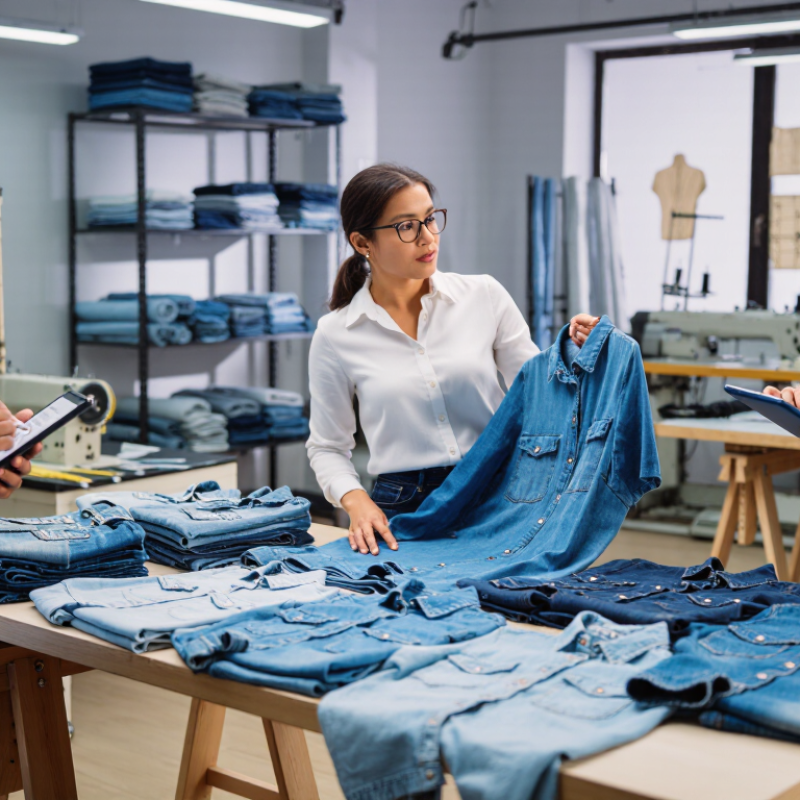
How to Find Denim Tops Wholesale Manufacturers in 2026?

Define Your Denim Tops Wholesale Requirements

Before contacting denim tops wholesale manufacturers in 2026, write a product brief that answers practical questions. Specify top styles, fabric weight, fiber blend, stretch percentage, washes, colors, and size range. A cropped jacket needs different measurements from an oversized shirt. Record them separately. Include target order quantity and acceptable size ratios. Guessing here can create expensive stock problems later.

Set measurable quality standards. State seam type, stitch density, button material, zipper performance, colorfastness expectations, shrinkage limits, and measurement tolerances. Add photos, sketches, and a measurement chart with clear points of measure. A factory cannot quote accurately from “premium denim” alone. Ask for sample development, pre-production approval, relevant testing reports, and packaging details. Keep claims realistic. In practice, wash variation can change sleeve length more than expected. Record that risk before placing an order.

Your sourcing brief should also define commercial terms: target cost, lead time, delivery window, payment structure, labeling needs, and inspection process. Separate firm requirements from negotiable preferences. This helps manufacturers respond consistently and makes quotations easier to compare. Request production capacity, relevant factory experience, material sourcing details, and corrective-action procedures. Do not accept vague promises. Ask how defects are recorded and resolved. Leave room for revision. The first brief is rarely perfect, especially when fit testing exposes a hidden problem.

Identify Reliable Wholesale Manufacturer Types

Factory-direct denim manufacturers suit buyers seeking control over fabric, washing, and production quantities. Vertically integrated suppliers often handle spinning, weaving, dyeing, cutting, and sewing under one roof. This structure can improve consistency and shorten communication time. It may also require larger minimum orders. Small-batch cut-and-sew factories are useful for testing new fits or seasonal colors. They usually offer more flexibility, but their machinery and finishing options may be limited.

Private-label denim specialists can develop custom labels, measurements, trims, and packaging. Choose suppliers with documented sampling procedures and clear measurement sheets. Ask for a physical sample, not only polished photographs. Check pocket symmetry, seam density, zipper movement, and fabric recovery after washing. Reliable manufacturers explain defects honestly. That matters.

Trading companies can connect buyers with several factories and support language or shipping coordination. However, their role must be transparent. Request the actual production location, inspection process, and responsible contact person. During a factory call, ask how rejected garments are recorded and corrected. A vague answer deserves caution. Certifications may support credibility, but they should be verified through current documents and relevant production scopes. I have found that attractive pricing can hide weak quality control. A second sample often reveals problems missed in the first review. Leave room for that mistake. Judge the manufacturer by communication, traceability, sample accuracy, and consistent delivery records.

How to Find Denim Tops Wholesale Manufacturers in 2026? - Identify Reliable Wholesale Manufacturer Types

Manufacturer Type Core Capability Typical Product Scope Typical MOQ Pattern Indicative Production Timeline Best Fit Reliability Checks
Vertically Integrated Denim Manufacturer Controls several stages, such as fabric development, washing, cutting, sewing, and finishing. Denim shirts, jackets, overshirts, tops, and coordinated denim collections. Usually medium to high; fabric development and production quantities are often separated. Commonly about 8–16 weeks after approval, depending on fabric and wash complexity. Brands needing consistent quality, custom washes, and better supply-chain visibility. Request factory audit records, fabric test reports, wash samples, production photos, and shipment references.
Specialized Cut-and-Sew Factory Focuses on pattern making, cutting, stitching, pressing, and garment assembly. Denim tops made from buyer-supplied or factory-sourced fabric and trims. Often lower than fully integrated factories, but varies by style, color, and fabric availability. Often about 5–10 weeks after final sample and material approval. Small and mid-sized buyers that already have fabric specifications or approved materials. Check sewing-line capacity, inline inspection procedures, size grading accuracy, and defect-repair policy.
OEM Denim Manufacturer Produces garments according to the buyer’s designs, technical packs, measurements, and material requirements. Custom denim shirts, cropped tops, western shirts, utility tops, and jacket-style tops. Generally medium or high because custom patterns and materials require setup work. Commonly about 8–14 weeks, including sampling, material sourcing, and bulk production. Established retailers and private-label buyers with clear product specifications. Verify technical-pack comprehension, sample revisions, measurement tolerances, and pre-shipment inspection results.
ODM Denim Manufacturer Offers existing designs that can usually be adjusted with selected fabrics, colors, labels, trims, or measurements. Ready-to-adapt denim tops, seasonal silhouettes, and standardized wholesale styles. Often lower and more flexible than fully custom OEM production, subject to stock and customization limits. Typically about 4–10 weeks after style and customization approval. New brands and buyers testing demand with a shorter development cycle. Confirm design ownership, customization boundaries, fabric composition, wash consistency, and repeat-order terms.
Private-Label Manufacturer Manufactures products that carry the buyer’s labels, packaging, care labels, and other brand identifiers. Stock or adapted denim tops prepared for retail or e-commerce distribution. Usually depends on whether the style is stock, semi-custom, or fully customized. Often about 5–12 weeks, including label and packaging approval. Retailers seeking branded presentation without operating their own factory. Review label compliance, packaging samples, social-compliance documentation, order confidentiality, and quality records.
Small-Batch or Low-MOQ Workshop Handles limited production runs, sampling, small collections, and early-stage product testing. Basic denim tops, limited drops, capsule collections, and test-market quantities. Low to moderate; per-unit costs may be higher because materials are purchased in smaller quantities. Often about 3–8 weeks, depending on the workshop’s current workload. Startups, boutique retailers, and brands validating fit, design, or market demand. Inspect the actual workplace, confirm equipment for denim thickness, request a paid sample, and define acceptable defects.
Sustainable or Certified-Sourcing Manufacturer Supports traceable materials, lower-impact processing, recycled fibers, or recognized social and environmental standards. Denim tops using certified or documented fibers, reduced-impact washes, and responsible packaging options. Usually medium or high because certified materials and traceability controls can restrict sourcing options. Commonly about 8–16 weeks, particularly when certified fabric must be reserved or developed. Brands with sustainability claims, compliance requirements, or traceability targets. Check certificate scope and validity, transaction records, chemical-management procedures, wastewater controls, and chain-of-custody evidence.

Note: MOQ and production timelines are indicative industry ranges rather than fixed rules. Confirm the exact quantity, fabric availability, sample schedule, payment terms, inspection standard, and delivery date directly with each manufacturer.

Evaluate Quality, Pricing, and Production Capabilities

When finding denim tops wholesale manufacturers in 2026, evaluate fabric quality before discussing discounts. Textile Exchange’s Materials Market Report 2024 recorded 124 million tonnes of global fiber production in 2023. This scale makes traceable material sourcing increasingly important. Ask for fiber composition, fabric weight, and mill origin. A practical sample should show even twill lines, secure bartacks, clean buttonholes, and consistent dye depth. Test shrinkage after three washes. Check colorfastness against ISO 105-C06 standards. Small defects matter.

Pricing needs a complete cost view. Request separate figures for fabric, trims, sewing, washing, packaging, and delivery. USDA’s Cotton: World Markets and Trade report forecast global cotton consumption at roughly 116 million 480-pound bales in 2024/25. Cotton volatility can affect quotes quickly. Compare at least three manufacturers using identical specifications. An unusually low price may hide weaker fabric, rushed washing, or excluded inspection costs. I have found that “competitive” quotes often change after sample approval.

Production capability requires evidence, not promises. Ask for monthly capacity, minimum order quantity, sample lead time, and quality-control records. Review recent audit documents and production photos carefully. Confirm whether the facility performs garment washing, repairs, and final inspections internally. A factory producing 50,000 pieces monthly may still struggle with a 3,000-piece detailed order. Request a pilot run before committing to bulk production. It costs more upfront. It may prevent expensive rework.

How to Find Denim Tops Wholesale Manufacturers in 2026?

Evaluate Quality, Pricing, and Production Capabilities

A practical supplier scorecard gives the highest weight to product quality, followed by total pricing and production capability. Verify fabric specifications, pre-shipment inspection results, defect rates, MOQ, sample timing, bulk lead time, capacity, and on-time delivery before placing an order.

Verify Manufacturer Credentials and Sample Standards

How to Find Denim Tops Wholesale Manufacturers in 2026?

Wholesale denim sourcing in 2026 should begin with evidence, not attractive product photos. Ask for the manufacturer’s legal registration, operating address, export history, and current production capacity. Cross-check these details against the factory floor, not only a sales representative’s PDF. Request recent audit reports, equipment photos, worker-safety records, and two trade references. Names can be withheld for privacy, but verifiable evidence cannot. That distinction matters.

Textile Exchange’s Materials Market Report 2024 recorded global fiber production at 124 million tonnes in 2023. It projects continued growth toward 160 million tonnes by 2030. This expansion makes traceability claims harder to accept without supporting documents. Ask where cotton is sourced, how recycled fibers are verified, and whether subcontractors handle washing or finishing. UNEP reports that textiles create roughly 2–8% of global greenhouse gas emissions. A manufacturer avoiding basic material questions deserves caution.

Sample approval needs measurable standards. Specify fabric weight, shrinkage tolerance, colorfastness, seam strength, skew, button security, and wash instructions. Request three samples from different production batches when possible. Compare pocket placement with a ruler. Check the inside seams after washing. Use applicable AATCC or ISO test methods through an independent laboratory. My checklist is not flawless; one missed measurement can still distort a large order. Keep signed sample records, approved measurements, and correction photos. Small inconsistencies often become expensive inventory problems.

Compare Offers and Build a Long-Term Supplier Partnership

Finding denim tops wholesale manufacturers in 2026 requires more than searching for the lowest price. When I compare offers, I send the same tech pack to every factory. It should specify fabric weight, fiber blend, wash effect, measurements, stitching, labels, and packing. A quote without these details is not truly comparable. Ask about sample costs, minimum order quantity, production time, payment stages, and shipping terms. Small details change the final margin.

I test the garment, not just the spreadsheet. I check color consistency under daylight, seam strength, button attachment, shrinkage after washing, and measurement tolerance. A factory should explain its inspection process and provide recent production photos or sample records. Relevant compliance documents can support a claim, but they do not replace physical checks. I once trusted a good-looking sample too quickly. Bulk sizing exposed the mistake.

A long-term partnership grows through controlled trials. Start with a modest order, written quality standards, and agreed solutions for defects. Track response time, revision accuracy, packing quality, and early delay notices. Discuss peak-season capacity, backup fabric options, and design confidentiality. Keep technical files versioned. Review meetings help, but honest disagreement matters. A supplier that only promises “no problem” may be less reliable than one that clearly explains its limits.

FAQS

Which manufacturer type suits buyers needing strong control over denim production?

Factory-direct manufacturers can manage fabric, washing, cutting, and sewing. They often provide better consistency. Minimum orders may be higher.

Are small-batch factories suitable for testing new denim designs?

Yes. They support trial fits and seasonal colors. Their finishing equipment may be limited. That trade-off matters.

What should private-label buyers request before placing an order?

Request measurement sheets, sampling procedures, and a physical sample. Check pocket symmetry, seam density, zipper movement, and washed fabric recovery.

How can buyers evaluate a trading company’s transparency?

Ask for the actual factory location, inspection process, and responsible contact. Vague answers deserve caution. Do not rely on polished photos alone.

What information should a comparable wholesale quotation include?

Send every supplier the same tech pack. Include fabric weight, fiber blend, wash effect, measurements, stitching, labels, and packing details.

Which garment tests should buyers complete before bulk production?

Check daylight color consistency, seam strength, button attachment, shrinkage, and measurement tolerance. Test the garment, not only the spreadsheet.

How can a buyer reduce risk when starting a supplier relationship?

Begin with a modest order and written quality standards. Agree on defect solutions, delivery expectations, and revision procedures.

What signs suggest that a manufacturer may be unreliable?

Watch for vague quality answers, unclear traceability, and repeated sample errors. Attractive pricing can hide weak quality control. I have missed this before.

Why should buyers request a second sample?

A second sample can reveal hidden problems. Bulk sizing may expose mistakes missed during the first review. Leave room for correction.

How can buyers build a stronger long-term partnership?

Track response time, packing quality, delay notices, and revision accuracy. Discuss peak-season capacity and backup fabrics. “No problem” is not always reassuring.

Conclusion

Finding the right denim tops wholesale manufacturer in 2026 begins with clearly defining your requirements, including product styles, fabric weights, size ranges, order quantities, customization options, target prices, and delivery expectations. A clear brief helps you identify suitable manufacturer types, such as factories specializing in denim apparel, private-label production, or flexible small-batch orders. During the selection process, assess material quality, stitching, washing results, production capacity, lead times, and pricing structure to ensure the supplier can support your business consistently.

Before placing an order, verify the manufacturer’s business credentials, communication standards, quality-control procedures, and sample accuracy. Samples should reflect the final fabric, fit, color, construction, and finishing details. Comparing several offers can reveal differences in value rather than price alone. Strong Denim Tops Wholesale Manufacturing depends on transparent communication, realistic specifications, reliable inspections, and clearly agreed terms. Building a long-term supplier partnership through regular feedback, stable ordering plans, and continuous quality reviews can improve consistency and create better opportunities for future product development.

Clara

Clara

Clara is a highly experienced marketing professional dedicated to helping businesses understand how thoughtful products, reliable service, and customer-focused solutions can create lasting value. With a strong understanding of the company’s offerings, she translates complex product features into......