
Insights & Resources
Apparel Manufacturing Blog
Industry news, production guides, and trend analysis from Los Angeles clothing experts.
Top 10 Custom Fashion Basics Manufacturers for Global Buyers
Table of Contents
- Defining Custom Fashion Basics and Global Buyer Requirements
- Evaluating Manufacturers by Quality, Capacity, and Customization
- Comparing the Top 10 Custom Fashion Basics Manufacturers
- Reviewing Production, Compliance, Pricing, and Shipping Factors
- Selecting the Right Manufacturer for Your Fashion Business
- FAQS
- Conclusion
- Related Posts
Choosing a reliable Custom Fashion Basics Manufacturer requires more than comparing catalog prices. Global buyers need consistent quality, transparent communication, realistic lead times, and responsible production practices. A polished website is not enough.
This guide introduces ten manufacturers serving international fashion brands, retailers, and emerging labels. Each company is considered through practical buying criteria, including fabric options, sampling procedures, minimum order quantities, customization depth, quality control, and export experience. Details such as shrinkage after washing, seam strength, colorfastness, size tolerances, and carton labeling can affect the final result. Small details matter.
The selection also considers evidence of professional operations, including factory information, certifications, customer support, and documented compliance with applicable trade and labor requirements. Buyers should still verify current records independently. Standards and production capabilities can change.
No ranking can fit every business model. A startup may value low minimums, while an established retailer may prioritize capacity and repeatability. Some manufacturers excel at heavyweight cotton T-shirts, while others handle fleece hoodies, leggings, or coordinated basics more effectively. The “best” choice depends on product goals, budget, market, and risk tolerance.
There is no perfect supplier.
This overview is designed as a practical starting point, not a substitute for sampling and due diligence. Request physical samples, review measurement charts, confirm production timelines, and test communication before placing a large order. A promising quotation may still hide weaknesses in finishing, packaging, or after-sales support. Careful comparison gives global buyers a clearer path toward dependable, compliant, and commercially suitable fashion basics.
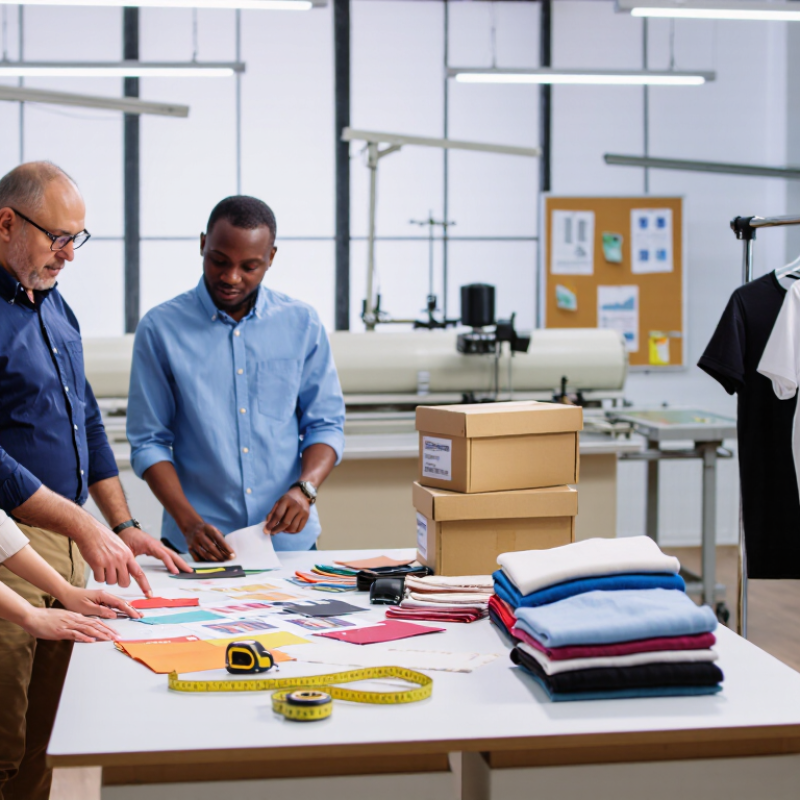
Defining Custom Fashion Basics and Global Buyer Requirements
Top 10 Custom Fashion Basics Manufacturers for Global Buyers
Defining Custom Fashion Basics and Global Buyer Requirements
Custom fashion basics include T-shirts, sweatshirts, leggings, underwear, and simple knitwear made to a buyer’s specifications. These products depend on repeatable fit, fabric performance, color accuracy, and stable production. A buyer’s tech pack should define fabric composition, GSM, measurements, grading, seam construction, labels, packaging, and acceptable tolerances. Fit matters. Small errors can create large return costs.
Global buyers now examine more than price and minimum order quantities. Textile Exchange’s Materials Market Report 2024 states that global fiber production reached 124 million tonnes in 2023. It could reach 160 million tonnes by 2030. This pressure makes recycled content, traceability, and material efficiency practical purchasing requirements. Buyers should request verified fiber records, chemical policies, and wastewater controls. They should also review social compliance evidence and factory audit dates.
Quality testing needs clear methods. ISO 6330 supports laundering tests, while ISO 105-C06 evaluates colorfastness to domestic washing. Shrinkage, pilling, seam strength, and dimensional stability should be checked before bulk approval. Yet paperwork can mislead. A perfect report may not represent every production lot. Buyers should approve a sealed sample, conduct pre-shipment inspections, and retain wash-test results. The difficult part is admitting that low-cost sourcing often hides higher quality risks.
Evaluating Manufacturers by Quality, Capacity, and Customization
Top 10 Custom Fashion Basics Manufacturers for Global Buyers
When comparing the top ten manufacturers, quality should begin with physical samples. Inspect fabric weight, seam strength, shrinkage, color consistency, and label placement. Request test reports when performance claims matter. A reliable factory explains its inspection process instead of offering vague assurances. Production photos help, but independent audits provide stronger evidence. Small details matter.
Capacity must match your sales plan, not just the factory’s largest monthly figure. Ask about current orders, peak-season staffing, equipment, and backup suppliers. Customization also needs clear boundaries. Confirm available fabrics, dye options, measurements, packaging, and pattern development. A capable technical team should convert sketches into graded specifications. In practice, some factories promise flexibility but resist small revisions. That gap deserves attention.
Tips: Order a pre-production sample before approving bulk manufacturing. Check the same garment after washing and repeated wear. Compare the approved sample with the first production batch. Keep written measurements, tolerances, delivery dates, and correction procedures. Do not guess. A lower quotation may hide weaker fabric or limited quality control. However, expensive pricing does not guarantee excellence. Review evidence, communicate precise requirements, and leave room for honest reassessment when the first sample exposes a design problem.
Comparing the Top 10 Custom Fashion Basics Manufacturers
Comparing the Top 10 Custom Fashion Basics Manufacturers requires more than checking factory prices. The strongest suppliers usually offer cotton T-shirts, sweatshirts, leggings, polos, and everyday knitwear. Their differences appear in fabric sourcing, pattern accuracy, production flexibility, and quality control. A low minimum order quantity helps emerging labels, while larger buyers often need stable capacity and repeatable color matching.
The top ten can be compared through practical evidence. Review sample measurements, wash-test results, stitching density, shrinkage rates, and delivery records. Manufacturers with in-house pattern teams often correct fit problems faster. Suppliers using certified fibers and documented labor audits provide stronger purchasing confidence. Still, certificates do not replace factory visits or independent inspections. Paperwork can look perfect.
Communication also separates reliable partners from merely attractive quotations. Ask how they handle rejected fabric, late trims, needle damage, and uneven dye lots. The best manufacturers explain corrective actions with photographs and production data. Some offer advanced digital sampling, while others remain better at small-batch hand finishing.
No supplier wins every category. A factory may provide excellent jersey basics but struggle with structured outerwear. My comparison would also consider response speed, packaging accuracy, payment terms, and post-production support. One weakness remains easy to miss: many buyers judge the first sample, not the tenth production batch. That mistake can create expensive surprises.
Reviewing Production, Compliance, Pricing, and Shipping Factors
Top 10 Custom Fashion Basics Manufacturers for Global Buyers
Reviewing Production, Compliance, Pricing, and Shipping Factors
Selecting a custom basics manufacturer requires more than comparing unit prices. Production evidence matters. Ask for live samples, fabric composition tests, size grading records, and realistic monthly capacity. Textile Exchange’s Materials Market Report 2024 recorded 124 million tonnes of global fiber production in 2023. That scale increases material risk, especially when recycled claims lack traceable documentation. Request transaction certificates, laboratory reports, and batch-level records. Small details often expose weak systems.
Compliance should cover worker safety, wage documentation, chemical controls, and product labeling. Independent social audits help, but they are not perfect. An audit can miss problems between visits. Buyers should review corrective-action history and speak with production staff when possible. Pricing also needs a wider lens: compare fabric weight, testing fees, packaging, minimum order quantities, and rework allowances. The cheapest quote may become expensive after failed inspections. We learned this the hard way.
Shipping decisions affect both cash flow and reliability. UNCTAD’s Review of Maritime Transport 2024 states that shipping carries over 80% of global trade volume. Request quotations for sea, rail, air, and multimodal routes, including duties, insurance, port charges, and peak-season surcharges. Confirm carton dimensions before booking freight. A single measurement error can alter landed cost. Build a small contingency budget. Plans change.
Top 10 Custom Fashion Basics Manufacturers for Global Buyers - Reviewing Production, Compliance, Pricing, and Shipping Factors
Comparative sourcing benchmark based on commonly quoted industry ranges for custom basic apparel. Pricing is indicative FOB pricing in USD per unit and varies by fabric, weight, trims, decoration, order quantity, testing, and destination.
| Profile | Primary Production Region | Core Product Strength | Typical MOQ | Indicative FOB Price | Sample Lead Time | Bulk Lead Time | Compliance and Testing Capability | Quality Control System | Shipping Advantage | Best Fit for Global Buyers |
|---|---|---|---|---|---|---|---|---|---|---|
| Profile 01 | Mainland China | Private-label T-shirts, fleece hoodies, sweatshirts | 100–300 units per style/color | US$3.20–12.50 | 7–14 days | 25–45 days | BSCI support OEKO-TEX options AQL inspection | Inline inspection, final inspection, measurement reports | Broadest freight and trim network | Startups needing broad customization and flexible materials |
| Profile 02 | Vietnam | Cut-and-sew knitwear, polos, athleisure basics | 300–500 units per style/color | US$4.00–15.00 | 10–18 days | 35–55 days | WRAP support BSCI support Social audits | Pre-production approval, inline checks, final AQL inspection | Strong ocean links to North America and Europe | Brands seeking stable medium-to-large production runs |
| Profile 03 | Bangladesh | High-volume T-shirts, jersey tops, sweatshirts | 500–1,000 units per style/color | US$2.40–9.00 | 12–21 days | 45–75 days | Accord-aligned audits BSCI support WRAP support | Fabric testing, needle control, inline and final inspections | Competitive ocean freight for large consignments | Cost-focused buyers with predictable repeat orders |
| Profile 04 | Turkey | Premium cotton basics, jersey, small-batch fashion essentials | 100–250 units per style/color | US$4.50–16.00 | 7–14 days | 25–45 days | GOTS options OEKO-TEX options BSCI support | European-style measurement control and fabric approval | Shorter transit to Europe and nearby markets | European labels prioritizing speed and premium hand feel |
| Profile 05 | Portugal | Premium jersey, heavyweight fleece, elevated basics | 150–300 units per style/color | US$8.00–24.00 | 10–20 days | 35–60 days | GOTS options GRS options OEKO-TEX options | Detailed tech-pack review, fabric testing, final inspection | Efficient road and ocean access within Europe | Premium brands requiring traceability and refined finishing |
| Profile 06 | India | Organic cotton basics, jersey, embroidery and printing | 200–500 units per style/color | US$3.00–13.50 | 10–18 days | 35–65 days | GOTS options GRS options SEDEX support | Fiber documentation, colorfastness testing, final AQL inspection | Good ocean coverage; air freight costs can vary | Eco-conscious buyers and decoration-heavy collections |
| Profile 07 | Pakistan | Fleece, terry, cotton T-shirts, sweat sets | 250–500 units per style/color | US$3.10–12.00 | 10–18 days | 35–60 days | BSCI support SEDEX support OEKO-TEX options | Fabric weight checks, shrinkage testing, inline inspection | Competitive sea freight for consolidated cargo | Streetwear, gymwear, and mid-volume fleece programs |
| Profile 08 | Indonesia | Jersey basics, resort casualwear, rayon and cotton garments | 300–600 units per style/color | US$3.80–14.00 | 10–20 days | 40–70 days | WRAP support BSCI support Restricted-substance testing | Inline checkpoints, color approval, final AQL inspection | Strong Asia-Pacific shipping connections | Asia-Pacific buyers and casual collections with soft fabrics |
| Profile 09 | Mexico | North American replenishment, T-shirts, uniforms and basics | 150–400 units per style/color | US$4.50–15.50 | 7–14 days | 25–50 days | WRAP support SMETA support US testing programs | Cutting audits, sewing-line checks, carton and labeling control | Short trucking and rail routes to the United States | North American buyers prioritizing speed and replenishment |
| Profile 10 | Eastern Europe | Small-batch jersey, uniforms, workwear and private-label basics | 80–250 units per style/color | US$5.50–18.00 | 7–14 days | 20–45 days | BSCI support OEKO-TEX options EU product testing | Small-batch inspection, traceability records, final measurement check | Fast road delivery across the European Union | European SMEs needing low MOQs and rapid market testing |
Selecting the Right Manufacturer for Your Fashion Business
Selecting a custom fashion basics manufacturer requires more than comparing unit prices. Product consistency, communication, and proof of compliance shape your real margin. The State of Fashion 2025 reports that global fashion growth remains modest, increasing pressure on buyers to control waste and inventory. Ask each factory for production samples, measurement records, and a clear defect policy.
Textile Exchange’s Materials Market Report 2024 states that global fiber production reached about 124 million tonnes in 2023. It may reach 160 million tonnes by 2030. This makes material traceability a practical selection standard, not a marketing extra. Check fiber certificates, dyeing records, testing procedures, and subcontractor disclosure. Request a small pilot order first. A factory may perform well on samples but struggle with repeated production. That gap matters.
Tips: Compare landed cost, not only the quoted price. Confirm minimum order quantities, lead times, payment terms, and inspection points in writing. Use measurable standards for shrinkage, colorfastness, stitching, and packaging. Visit the facility when possible, or arrange an independent audit. Still, audits are not perfect. A clean report cannot guarantee every future batch. Leave room for rechecking, especially after material changes or urgent production requests. Choose a manufacturer willing to share problems early, because silence often becomes expensive rework.
Top 10 Custom Fashion Basics Manufacturers for Global Buyers
Selecting the Right Manufacturer for Your Fashion Business
Apparel export value is a useful market-level indicator when comparing potential sourcing regions. Higher export volumes generally reflect established production capacity, supplier networks, and international logistics. The figures are rounded 2023 estimates based on WTO merchandise trade statistics and are not rankings of individual manufacturers.
FAQS
Compare fabric quality, pattern accuracy, production flexibility, and quality control. Unit price alone can hide testing fees, rework, and weak packaging.
Common products include cotton T-shirts, sweatshirts, leggings, polos, and everyday knitwear. Some factories handle jersey well but struggle with structured garments.
Request sample measurements, wash-test results, shrinkage rates, colorfastness records, and stitching checks. Review the tenth production batch, not only the first sample.
Traceability helps verify fiber content, recycled claims, dyeing records, and production batches. Ask for certificates, laboratory reports, and transaction-level documentation.
No. Audits can miss problems between visits. Review corrective actions, worker-safety records, wage documents, chemical controls, and subcontractor information.
Compare landed cost, including fabric weight, testing, packaging, minimum orders, duties, insurance, and possible rework. The cheapest quotation may become expensive later.
Request sea, rail, air, and multimodal options. Confirm carton dimensions, port charges, insurance, duties, and seasonal surcharges before booking freight.
A small pilot order is safer. It can reveal repeated-production problems, uneven dye lots, measurement errors, or packaging mistakes. Still, a pilot cannot predict everything.
Reliable suppliers explain rejected fabric, late trims, needle damage, and uneven dye lots. They share photographs, production data, and corrective actions. Silence gets expensive.
Visit when possible, or arrange an independent inspection. Keep rechecking after material changes or urgent production requests. Paperwork can look perfect.
Conclusion
Choosing the right Custom Fashion Basics Manufacturer is essential for global buyers seeking dependable quality, flexible production, and consistent delivery. This guide explains what custom fashion basics include, from everyday apparel to adaptable wardrobe essentials, and outlines the key requirements of international buyers, such as fabric quality, sizing accuracy, design flexibility, order capacity, and reliable communication. It also presents a practical framework for evaluating and comparing leading manufacturers based on craftsmanship, production capabilities, customization options, quality control, and responsiveness.
The article further reviews important business factors, including compliance documentation, ethical production practices, pricing structures, minimum order quantities, lead times, packaging, and international shipping arrangements. By comparing these elements carefully, fashion businesses can identify suppliers that match their product vision, budget, sales volume, and target markets. The final selection should balance customization, quality, scalability, transparent costs, and dependable logistics to support long-term growth and customer satisfaction.

Blog Tags: