
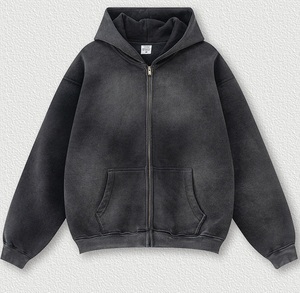
Sun-Faded Wash
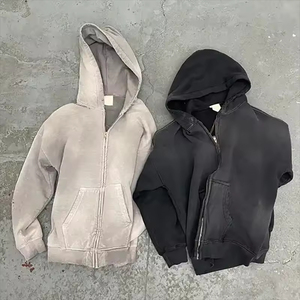
Winter Streetwear Vintage Sun-Faded Distressed Hoodie
Double Layer No String Custom Dye
Inquire Now
Engineered for luxury streetwear and contemporary fashion labels. Formulated with zero-shrink pre-wash chemistry, high-density cotton fleece, and precision hand-distressing.
A Comprehensive Analysis of Polymer-Bound Pigments, Reactive Dye Chemistry, Acid Distressing, and Sustainable Closed-Loop Sourcing for B2B Procurement Officers.
In modern high-end apparel manufacturing, garment dyeing (dyeing fully sewn, raw greige apparel) has superseded conventional piece dyeing for contemporary streetwear, activewear, and vintage fashion lines. Unlike traditional roll-dyed fabrics where cut-and-sew operations leave uniform, flat coloration, garment dyeing imparts a rich, soft-hand texture, subtle tonal variation across seamlines, and immediate pre-shrunk dimensional stability.
For OEM/ODM apparel buyers, garment dyeing eliminates inventory overstock risks. Greige garment blanks can be manufactured in bulk and stored safely in warehouse facilities, then rapidly color-matched to seasonal micro-trends in smaller, highly flexible dye batches within 7–10 days.
Achieving superior color fastness, soft tactile hand-feel, and distinct vintage aesthetics requires strict application of specialized dye chemistry tailored to specific fiber structures:
Sourcing high-density fabrics such as 500 GSM 100% Cotton French Terry or ultra-heavyweight fleece introduces complex dye-penetration challenges. Standard industrial dyeing vats often suffer from color streakiness or uneven core saturation when handling dense, double-layered garment constructions.
At Urban Nation Apparel, our specialized low-liquor-ratio (1:5) jet dyeing equipment utilizes synchronized liquor circulation and high-pressure liquor penetration nozzles. This guarantees that deep-pile fleece, double-lined hoods, oversized kangaroo pockets, and heavy ribbing absorb pigments uniformly without cross-staining or shade banding.
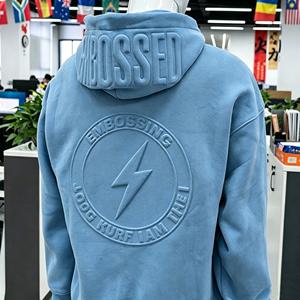
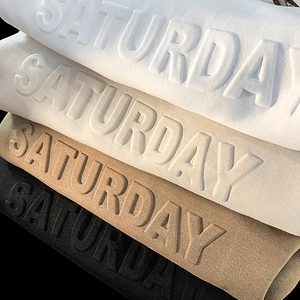
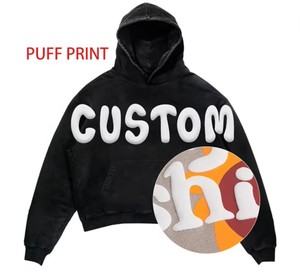
A critical consideration for modern OEM brands is the sequence of decoration vs. dyeing. Applying 3D Puff Printing or high-pressure thermal embossing to raw garments prior to or following garment washes requires strict polymer formulation:
Our engineering process incorporates high-elasticity silicone puff additives cured at 165°C. When subjected to subsequent enzyme washes, stone tumbling, or acid distressing, the 3D embossed logos retain their structural volume and crisp edge geometry without cracking, peeling, or color bleeding.
| Dyeing / Wash Technique | Suitable Fiber Types | Color Fastness (ISO 105) | Visual & Aesthetic Finish | Ideal Product Category |
|---|---|---|---|---|
| Reactive Garment Dye | 100% Cotton, Organic Cotton, Bamboo | Grade 4.5 - 5.0 (High) | Clean, solid, saturated tone; ultra-soft hand feel | Luxury Basics, Minimalist Hoodies, Premium Tees |
| Pigment Garment Wash | Cotton French Terry, Cotton Blends | Grade 3.5 - 4.0 (Medium) | Chalky, vintage matte finish with seam highlights | Streetwear Hoodies, Vintage Sweatpants |
| Acid & Mineral Wash | Heavyweight Fleece (400-500 GSM) | Grade 3.0 - 4.0 (Distressed) | High-contrast marbled grain, 90s aesthetic finish | Distressed Outerwear, Heavy Zip-Up Hoodies |
| Ozone Sun-Faded Wash | 100% Cotton Knit Fabrics | Grade 4.0 (Stable Fade) | Natural solar degradation look, soft muted tones | Sun-Faded Drop-Shoulder Streetwear Sets |
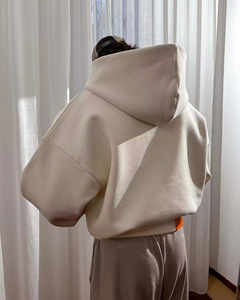
| Bio-Enzyme Stone Wash | Heavyweight Canvas, French Terry | Grade 4.0 - 4.5 (High) | Subtle edge abrasion, velvety surface texture | Cropped Oversized Hoodies & Boxy Tops |
Driven by global ESG regulations (such as the EU Ecodesign Directive), international apparel brands are transitioning away from high-water consumption wash cycles. The integration of supercritical CO2 fluid dyeing and closed-loop water recirculation systems reduces water usage by up to 92% while eliminating toxic chemical effluent discharges.
Consumer demand has pivoted sharply toward structural garments (450 GSM to 600 GSM French Terry). Sourcing managers require mills capable of executing complex multi-stage washes (acid wash followed by silicon softening) on dense fabrics without causing structural warp or seam twisting.
Zero Discharge of Hazardous Chemicals (ZDHC) Level 3 certification is fast becoming mandatory for North American and European imports. Garment exporters must provide transparent lab test certificates verifying the total absence of heavy metals, phthalates, and banned Azo dyes.
Headquartered in Los Angeles, California, Urban Nation Apparel is a vertically integrated fashion engineering and garment manufacturing company. Specializing in high-end streetwear, fashion basics, womenswear, and menswear, we bridge the gap between creative design vision and international scale production.
Our global production footprint spans modern, state-of-the-art facilities across China, Vietnam, Bangladesh, and Mexico, backed by our central Los Angeles R&D center. From concept development, custom knit development, and lab-dip color formulation to high-volume garment dyeing, 3D embossing, and global logistics routing, we deliver seamless OEM/ODM services to apparel enterprises worldwide.
Clear technical insights for OEM/ODM apparel buyers, supply chain executives, and fashion brand managers.
Our standard Minimum Order Quantity (MOQ) for custom garment-dyed styles starts at 200 pieces per colorway/style for standard colors. For custom Pantone color matching or specialized washes (such as vintage acid wash, sun-faded, or mineral distress), our flexible production lines accommodate 300 to 500 pieces, enabling boutique and enterprise brands to test micro-collections with low inventory risk.
We utilize advanced Datacolor spectrophotometer systems in our dye laboratories. Every lab dip (submitted as a 3-option shade band within 3-5 business days) is verified under standardized D65, TL84, and CWF lighting conditions. We strictly enforce a color variance threshold of ΔE < 0.8 against official Pantone TCX/TPG standards.
Garment dyeing subjects raw garments to high heat and wet agitation. To prevent post-purchase shrinkage, our pattern engineers calculate a precise shrinkage allowance matrix (+4% to +8%) during initial CAD grading. Fabrics undergo pre-shrunk steam treatment prior to cutting, guaranteeing final consumer shrinkage remains under 2% after commercial laundering.
Yes. We utilize specialized thermosetting elastomeric puff inks and discharge print bases engineered to withstand abrasive stone washes and chemical acid treatments. By cross-linking print polymers prior to the wash stage, screen graphics maintain crisp dimensionality without flaking or color leaching.
Our global partner facilities are fully compliant with OEKO-TEX Standard 100 Class I (safe for infants) and certified under ZDHC Level 3 chemical guidelines. We utilize non-toxic, Azo-free reactive dyes and biological water treatment plants that neutralize effluent water prior to municipal discharge.
Following tech pack sign-off and lab-dip approval, pre-production (PP) samples are delivered in 7–10 days. Full-scale bulk production for OEM/ODM orders is typically completed and ready for export shipment within 21 to 30 calendar days, depending on order volume and wash complexity.
Elevate your brand's next collection with custom color formulations, industrial vintage washes, and heavyweight fabric engineering. Our LA design team and global manufacturing hubs are ready to bring your vision to market.
Inquire Now