Strategic Sourcing Whitepaper: The Evolution of Premium Apparel Sourcing for Greater Boston Brands
The Greater Boston apparel ecosystem is undergoing a dramatic structural transformation. From the historical brick mills of Lawrence and Lowell to the modern luxury retail centers of Boston’s Back Bay, South Boston Seaport District, and Cambridge, regional brands are moving away from light-to-midweight fast fashion. Today’s East Coast consumers demand structural longevity, dense thermal insulation, tactile luxury, and authentic wet-processed aesthetics. Sourcing managers across New England face a complex challenge: how to deliver heavyweight luxury garments—such as 500 GSM French Terry hoodies, acid-washed vintage zip-ups, and embossed 3D graphic pullovers—while maintaining agile lead times, robust quality control, and strict compliance.
As a vertically integrated apparel manufacturer operating with a creative design headquarters in Los Angeles and global production facilities across China, Vietnam, Bangladesh, and Mexico, Urban Nation Apparel bridges the operational gap for Boston brands. By consolidating yarn spinning, high-density knitting, eco-friendly dye processing, custom distress wash techniques, and precision cut-and-sew under a unified Quality Management System (QMS), we offer an enterprise-grade solution engineered specifically for high-end fashion houses and corporate merchandisers.
Information Gain Insight: The 500 GSM French Terry Benchmark
Standard market promotional hoodies typically utilize 280 GSM to 320 GSM carded cotton blends, which degrade and warp after fewer than 10 commercial wash cycles. Premium Boston streetwear brands require combed, long-staple 100% cotton knits rated at 450 to 500 GSM. This high-density structure retains thermal insulation during sub-zero New England winters while serving as a structurally stable canvas for high-density 3D puff prints and deep-penetration distress washing without stitch distortion.
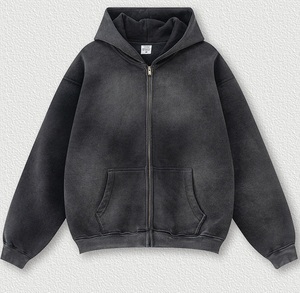
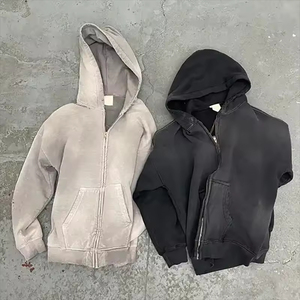
Achieving the coveted vintage, sun-faded, distressed finish featured in modern luxury collections requires precise wet processing chemistry. Standard piece-dyeing methods cannot achieve the depth of shade and multidimensional tonal fading seen on high-end boutique racks. Our manufacturing infrastructure incorporates specialized garment-wash protocols:
Sun-Faded Acid Wash
Controlled potassium permanganate (KP) fogging and neutral enzyme treatment yield organic tonal degradation along seam lines without degrading thread tensile strength.
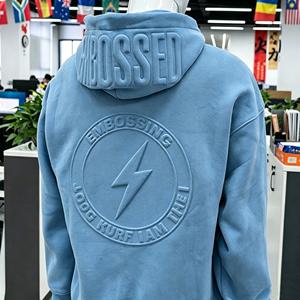
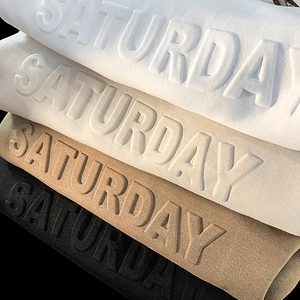
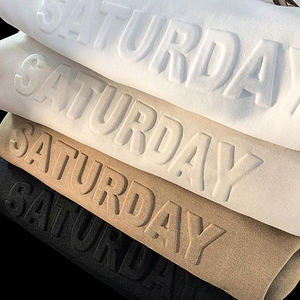
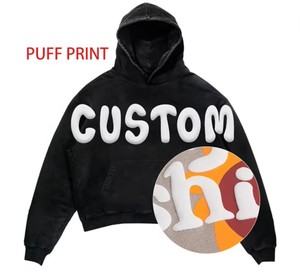
3D Puff & Foam Printing
High-viscosity silicone and polyurethane additives expanded under calibrated curing heat (160°C) deliver raised, tactile branding that resists cracking or peeling.
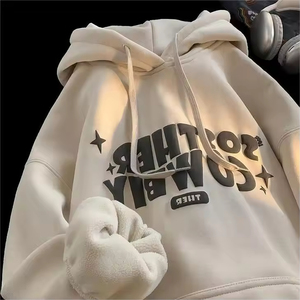
Double-Layer Thermal Construction
Internal self-fabric linings and stringless hood closures eliminate fraying while locking in heat—crucial for New England's brutal winter coastal maritime climate.
Localized Application Scenarios: Meeting New England’s Commercial & Environmental Demands
Garment sourcing for the Boston market cannot rely on generic, warm-weather catalog blanks. The regional geography, demographic composition, and economic driver hubs dictate distinct performance criteria:
1. Cambridge & Tech Hub Premium Merch
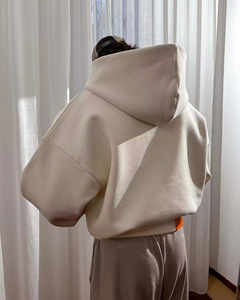
The concentration of biotechnology firms, artificial intelligence labs, and academic institutions across Kendall Square and Harvard Square has altered corporate gifting. Modern Boston tech companies reject cheap polyester fleece. Sourcing directors require minimal, stringless 500 GSM French Terry hoodies with subtle 3D embossed logo applications—blending corporate identity with executive streetwear aesthetics.
2. Seaport District & Back Bay Boutique Retail
High-end retail storefronts along Newbury Street and in the South Boston Seaport require fast inventory turns with distinctive visual character. Vintage sun-faded distressed full-zips and cropped drop-shoulder silhouettes satisfy the demand for elevated capsule collections. Our flexible minimum order quantities (MOQs) allow local designers to drop limited-run colorways without carrying excess inventory risk.
3. Maritime Coastal Layering
From the shores of Cape Cod to Boston Harbor, coastal dampness demands fabrics that maintain structural breathability while preventing wind penetration. Double-layered 100% cotton fleece constructions provide natural warmth retention without synthetic clamminess, offering superior comfort during shoulder seasons and harsh winters.
4. Athletics & University Alumni Collections
Greater Boston hosts over 50 higher education campuses. Alumni networks and collegiate streetwear lines demand apparel that withstands repeated high-temperature washing. Utilizing reactive dye baths and pre-shrunk combed cotton ensures that rich maroon, navy, and forest green university colorways retain color fastness (Grade 4.5+) for years.
Technical Sourcing Matrix: Standard Wholesale vs. Urban Nation Manufacturing
Understanding the structural differences between mass-market promotional blanks and specialized OEM/ODM heavyweight production is critical for apparel buying teams:
Specification Variable
Standard Wholesale Blanks
Urban Nation Boston-Spec OEM
Technical Advantage
Fabric Density (GSM)
260 – 320 GSM
450 – 500+ GSM
Superior drape, heat retention, and structural durability.
Yarn Composition
60/40 CVC or Open-End Carded
100% Combed Ring-Spun Cotton / French Terry
Zero pilling, soft hand-feel, hypo-allergenic profile.
Dimensional Shrinkage
5% to 8% post-wash
Under 1.5% (Pre-shrunk, steam-stabilized)
Guaranteed true-to-size retail fit after domestic washing.
Embellishment Compatibility
Flat Screen Print only
3D Puff, Foam Print, Micro-Embossing, Distressing
Unlocks high-margin luxury streetwear aesthetics.
Seam Reinforcement
Single-needle standard stitch
5-Thread Twin Needle & Cover-Stitch
Prevents seam bursting during stress and tension.
Dye & Wash Technology
Basic Direct Pigment Dye
Sun-Faded Acid Wash, Eco-Ozone Wash, Mineral Wash
Delivers authentic, high-end vintage patina.
Vertically Integrated Global Manufacturing Infrastructure
Headquartered in Los Angeles with offshore and nearshore production facilities, Urban Nation Apparel presents a hybrid supply chain model tailored to East Coast brands. Sourcing teams in Boston benefit from localized US-based account management, rapid tech-pack development, and global manufacturing scale.
Design & R&D Studio (Los Angeles)
Our LA facility handles pattern making, grading, 3D digital sampling, and technical specs development. Boston brands can turn concepts into physical counter-samples within 7 to 10 business days.
High-Volume Production (Asia & Mexico)
State-of-the-art facility hubs in China, Vietnam, Bangladesh, and Mexico provide raw material volume purchasing power, specialized heavy-knit machinery, and automated cutting rooms.
Stringent Quality Assurance (AQL 1.5/2.5)
Every garment batch undergoes inline and final inspections. Fabric weight (GSM) verification, color-fastness testing, needle-detector clearance, and barcode compliance are fully documented prior to port departure.
Procurement Guide
Frequently Asked Questions for Boston Garment Buyers
Q:
What are your Minimum Order Quantities (MOQs) for custom 500 GSM hoodies delivered to Boston?
Our baseline MOQ for custom-manufactured heavy knit garments (custom fabric weight, specialized color dyeing, cut-and-sew) starts at 300 pieces per style/colorway. For blank stock garments or custom screen/puff printing on our existing heavyweight blanks, MOQs start as low as 100 pieces, enabling rapid sampling for boutique drops.
Q:
How do you handle shipping, customs clearance, and logistics into the Port of Boston or Logan Cargo Terminal?
We provide full DDP (Delivered Duty Paid) shipping services directly to your distribution center or retail space in Greater Boston. Our logistics team coordinates sea freight through Conley Terminal at the Port of Boston, as well as expedited air freight via Boston Logan International Airport (BOS), taking care of all customs documentation, tariffs, and inland drayage.
Q:
Can you replicate specific vintage, sun-faded distress washes for modern streetwear lines?
Yes. Our wet processing facilities excel in vintage acid washes, mineral washes, sun-faded ozone bleaching, and hand-distressed grinding along pocket edges and cuffs. Simply send us a physical benchmark reference garment or Pantone TPX color code, and our wet-dye master technicians will produce an exact lab dip and wash sample.
Q:
What is the standard production lead time from tech pack approval to East Coast delivery?
Initial prototyping and pre-production sample (PPS) creation takes 7–12 business days. Once the PPS is approved, bulk production takes approximately 25 to 35 days depending on wash complexity. Sea freight to Boston takes 22–28 days, while air freight expedites delivery in 5–7 days.
Q:
How do you ensure 3D puff and foam prints do not crack during cold New England winters?
We utilize high-elasticity silicone-based puff inks mixed with micro-foaming agents that undergo dual-stage tunnel curing. This structural polymer bond maintains flex resilience at sub-zero temperatures, ensuring the 3D raised graphic remains crack-resistant even after harsh machine washes.
Q:
Do you offer eco-friendly, GOTS-certified organic cotton options for sustainable Boston brands?
Absolutely. We source GOTS-certified 100% organic long-staple cotton and recycled polyester blends. Furthermore, our dyeing facilities implement closed-loop water treatment systems to minimize environmental impact, adhering to international OEKO-TEX Standard 100 guidelines.
Ready to Upgrade Your Apparel Sourcing Engine?
Connect directly with our senior garment technicians and OEM/ODM procurement directors to request sample swatches, review tech packs, or initiate bulk pricing quotes for the Boston market.